
Automating Demo Booking With AI
Learn how AI can automatically schedule sales demos.
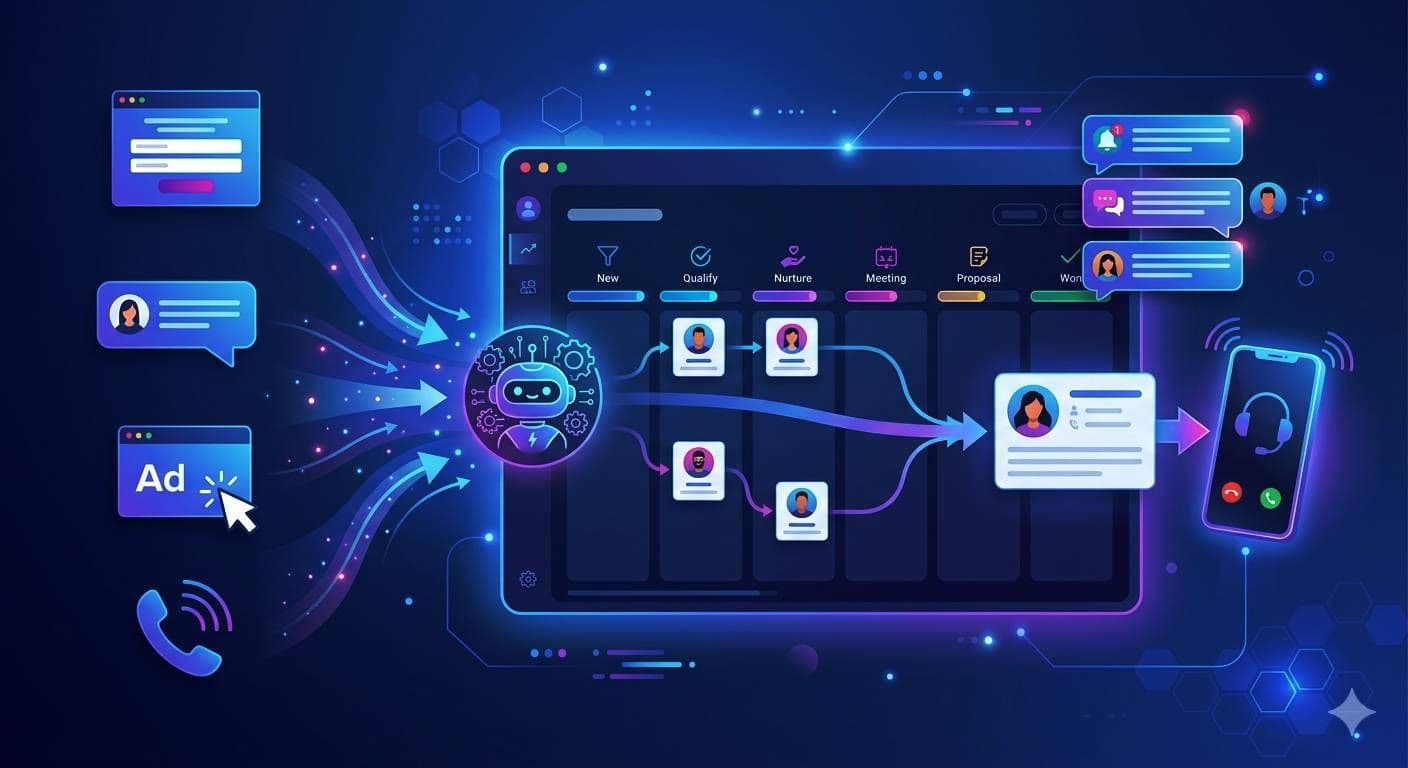
A buyer lands on a SaaS pricing page at 9:12 a.m.
They have already read comparison pages, skimmed reviews, and asked two coworkers for opinions. They are not browsing casually. They are finally ready to see the product.
So they click “Book a Demo,” fill out the form, and hit submit.
Then nothing useful happens.
They get a polite confirmation email. Maybe a sales rep is notified in Slack. Maybe the lead enters the CRM correctly. Maybe someone plans to reach out later that morning.
But the one thing the buyer wanted in that moment was not a confirmation.
It was a calendar.
This is where a surprising number of inbound demo flows break. The issue is not always the first response itself. The issue is the time gap between lead capture and actual meeting booking.
That is exactly why Automating Demo Booking With AI matters. It closes the dead space between "I want to talk" and "your meeting is confirmed."
And that dead space is where a lot of high-intent pipeline quietly disappears.
The Real Problem Is the Booking Gap
Most teams think they have a response problem.
In many cases, they actually have a scheduling problem.
A lead fills out a demo form. The company responds. But the rep still has to review the lead, send an email, propose times, wait for a reply, check availability, and manually lock in the meeting.
That process turns a high-intent moment into a slow coordination exercise.
The key issue is simple: every extra step between form submission and booked meeting lowers the chance that the conversation ever happens.
This is an important reframing.
Leads do not disappear because they hate follow-up. They disappear because booking friction breaks buying momentum.
That is the core problem this article is addressing.
If you want to understand the broader mechanics behind
https://www.fusionsync.ai/posts/lead-response-time-5-minute-rule
the booking gap is one of the most expensive parts of that process.
Why the Time Between Form Fill and Meeting Matters So Much
A demo request is not a normal lead.
It is a hand raised at the bottom of the funnel.
When someone requests a demo, they are mentally prepared for a next step. They expect progress right away. Not eventually. Not after two rounds of email coordination. Right away.
If the meeting is not booked quickly, several subtle things start working against you.
First, context fades.
The buyer submitted the request while actively evaluating your product. An hour later, they are back in meetings, answering messages, and dealing with their real job. The urgency that existed at submission starts to thin out.
Second, effort tolerance drops.
At the point of form submission, a lead may be willing to answer a few questions and pick a time. But if they have to wait for an email, reply back, review options, and continue the thread later, the interaction starts feeling heavier than it should.
Third, internal momentum cools.
Many B2B buyers are not evaluating software alone. They may need to bring in a manager, loop in operations, or revisit the problem later with their team. When the meeting is not booked while intent is high, the internal push for action weakens.
This is why the delay between capture and calendar confirmation is so dangerous. It wastes the buyer’s decision energy at the exact moment they were most ready.
Why Manual Demo Scheduling Creates Hidden Delays
The problem is rarely one massive failure.
It is usually a pile of small delays that look harmless on their own.
A rep wants to review the company before sending a calendar link.
A lead owner has to be assigned first.
A qualification question needs to be checked.
The rep is in another call.
The buyer replies two hours later.
The proposed time no longer works.
A new slot is suggested.
Now a same-day meeting has turned into a next-week meeting, or no meeting at all.
This is why manual scheduling is more expensive than it looks. It does not just consume time internally. It introduces waiting cycles.
And waiting cycles kill conversion.
Many teams already recognize that they need faster first contact. But faster contact without faster booking still leaves friction in the most important part of the flow. That is why companies looking at
http://fusionsync.ai/posts/how-ai-can-respond-to-leads-instantly
should also think beyond the first message and focus on what happens next.
The Consequence Is Not Slower Sales. It Is Lost Meetings
When teams talk about response speed, they often focus on top-of-funnel efficiency.
But the more immediate cost is missed meetings.
A demo request that is not converted into a calendar event quickly is fragile. It can stall for reasons that never show up cleanly in CRM reporting.
The lead may ghost.
They may "circle back next quarter."
They may no-show after a weakly confirmed meeting.
They may choose a lower-friction competitor.
But underneath all of those outcomes is the same operational failure: the business did not secure the meeting while intent was strongest.
This has downstream effects that sales leaders feel everywhere:
- fewer booked demos from existing lead volume
- lower show rates because commitment was weak from the start
- less predictable pipeline creation
- lower ROI from paid acquisition and demo request pages
- more pressure to generate new leads instead of converting current ones
Here is the sharp insight:
pipeline does not begin when a form is submitted. Pipeline begins when a meeting is booked.
That distinction matters.
If your system is optimized to collect demo requests but not to secure appointments immediately, you are measuring interest, not momentum.
What Buyer Behavior Tells Us About Demo Booking Friction
High-intent buyers want to keep moving.
That does not mean they want a long sales process. It means they want the next step to feel easy.
A strong inbound experience has a simple rhythm:
request submitted, qualification confirmed, meeting booked.
A weak one looks like this:
request submitted, acknowledgment received, waiting begins.
That waiting period creates ambiguity.
The buyer starts asking questions they should never have to ask.
Did my request go through?
Is anyone actually available?
Am I qualified enough for a demo?
Should I just research more on my own?
Every unanswered question adds hesitation.
This is especially true for paid traffic, product-led SaaS, and high-volume inbound teams, where buyers often compare several tools in one sitting. If your workflow stretches booking into a later step, you are asking the buyer to preserve motivation on your behalf.
That is a risky bet.
It also aligns with the broader pattern behind
http://fusionsync.ai/posts/why-demo-requests-dont-convert
In many cases, the issue is not poor lead quality. It is that the path to the meeting is too slow and too manual.
Automating Demo Booking With AI Reduces the Highest-Risk Delay
The biggest advantage of Automating Demo Booking With AI is not just speed for its own sake.
It is compression.
AI compresses the entire interval between lead capture and booked meeting.
Instead of waiting for a rep to review, respond, qualify, and schedule, the system can act immediately.
A well-designed AI workflow can:
- respond within seconds of form submission
- ask qualifying questions in real time
- confirm intent and route based on fit
- present available meeting times instantly
- book directly into the correct calendar
- trigger reminders and follow-up automatically
This matters because it removes the most failure-prone part of the funnel: the back-and-forth between expressed interest and scheduled conversation.
Done well, AI does not make the process feel robotic. It makes it feel decisive.
The buyer gets what they wanted in the first place: progress.
What an Effective AI Demo Booking Flow Looks Like
The best systems do not just blast a calendar link to everyone.
They reduce time to booking without creating chaos for the sales team.
A practical flow usually looks like this:
1. Instant Acknowledgment With a Next Step
The moment a demo form is submitted, the lead receives a response that moves directly toward scheduling.
Not just “Thanks, we got your message.”
Something closer to: we can get you on the calendar now.
2. Lightweight Qualification
AI asks the few questions needed to confirm fit or route correctly.
This prevents unnecessary rep involvement while keeping the process fast.
3. Smart Routing
Based on territory, segment, product line, or availability, the lead is matched to the right calendar automatically.
This is where teams often benefit from combining scheduling automation with solid routing logic. If that part is messy, it helps to understand
http://fusionsync.ai/posts/automatic-lead-assignment
before scaling the booking flow.
4. Immediate Booking
Instead of waiting for a human handoff, the lead sees live time options and confirms the meeting in the same interaction window.
5. Automated Reminders and Backup Follow-Up
If no slot is selected right away, the system follows up quickly while the lead is still warm.
The goal is not just initial engagement. The goal is calendar conversion.
Practical Ways to Reduce Time Between Lead Capture and Meeting Booking
Even before implementing a full AI system, teams can improve this part of the funnel by making a few structural changes.
First, treat booked meetings as the primary conversion event for demo requests.
Not form fills.
Not email opens.
Not first touches.
If you do not measure time from submission to meeting confirmation, you will miss the bottleneck.
Second, reduce the number of human approvals required before scheduling.
If every lead has to be reviewed manually before a calendar is offered, booking speed will always be limited by rep availability.
Third, keep qualification narrow.
Many teams overcomplicate demo intake. They ask for too much information up front, then take too long to act on it. Only gather what is necessary to route and prioritize.
Fourth, present scheduling as the default next step.
Do not make the buyer wait for a rep to “reach out to coordinate.” Coordination is where momentum goes to die.
Fifth, build follow-up around unfinished bookings.
A lead who submitted a demo request but did not choose a time is not a dead lead. They are an incomplete booking. Treating that as its own workflow can recover a meaningful amount of pipeline.
The Strategic Value Goes Beyond Convenience
It is easy to think of automated scheduling as an efficiency improvement.
It is more than that.
It changes how quickly intent becomes pipeline.
That has important implications for:
- sales capacity planning
- paid acquisition efficiency
- demo show rates
- rep utilization
- forecasting accuracy
When meetings are booked immediately, the funnel becomes tighter and more measurable. Marketing sees clearer return on lead generation. Sales gets cleaner handoffs. Revenue teams stop losing high-intent opportunities in scheduling limbo.
In other words, faster booking is not an admin upgrade.
It is a conversion strategy.
Key Takeaways
- The most expensive delay in many demo funnels is the gap between lead capture and booked meeting.
- Demo requests are high-intent signals, but intent fades quickly when scheduling is delayed.
- Manual booking creates waiting cycles that reduce conversion even if first response happens relatively fast.
- The real goal is not just faster contact. It is faster calendar confirmation.
- Automating Demo Booking With AI helps compress qualification, routing, and scheduling into one immediate flow.
- Teams that optimize for booked meetings, not just form submissions, create stronger pipeline from the same inbound volume.
Conclusion
The companies that win more demo-driven revenue are often not the ones with the most leads. They are the ones that turn intent into appointments with the least friction.
That is why Automating Demo Booking With AI is such an important shift.
It removes the lag between interest and action.
It protects buyer momentum.
And it helps sales teams capture meetings while the prospect is still mentally in the decision.
If your demo funnel still depends on manual coordination after the form fill, your biggest conversion leak may not be lead generation at all. It may be the time you lose before the meeting is ever booked.
FAQ
1. What does automating demo booking with AI actually mean?
It means using AI to handle the immediate steps after a demo request comes in, such as responding instantly, asking a few qualification questions, routing the lead correctly, and offering live calendar availability so the meeting can be booked right away.
2. Is AI demo booking only useful for high-volume sales teams?
No. It is especially valuable anywhere there is a gap between form submission and scheduling. Even lower-volume teams benefit because high-intent demo requests are often the most valuable leads, and delays in booking can hurt conversion disproportionately.
3. Will automating booking make the experience feel impersonal?
Not if it is designed well. In many cases, it feels more helpful because the buyer gets immediate progress instead of waiting for back-and-forth coordination. The best systems feel fast, clear, and relevant, not robotic.
Next step
Let's Fix Your Lead Response in 30 Minutes
We'll walk through your current lead flow, identify where leads are slowing down or getting missed, and show you exactly what can be automated to increase speed, conversations, and bookings.
Where it works
View all use cases