
Automated Lead Follow-Up Systems Explained
Discover how automated systems follow up with leads.
A roofing company launches a weekend storm campaign.
By Saturday afternoon, the ads are working. Quote requests start coming in from homeowners dealing with leaks, missing shingles, and water damage. The intent is high. These are not casual browsers. These are people with an immediate problem.
But the office is lightly staffed. One sales rep is at a job site. Another is off for the weekend. Form submissions hit the CRM, sit there, and wait.
By Monday morning, the pipeline looks healthy on paper. There are 46 new leads.
In reality, many of those opportunities are already gone.
Not because the leads were bad.
Not because the ad targeting failed.
Not because the sales script needed work.
They went cold because there was no system in place to respond the moment they raised their hand.
That is the real value behind Automated Lead Follow-Up Systems Explained. At their best, these systems do one job extremely well: they eliminate the delay between inquiry and action.
And that delay is where conversion rates quietly collapse.
The real problem is not follow-up effort. It is follow-up latency.
Most businesses think of follow-up as a sales discipline problem.
- Did the rep remember to call?
- Did someone send the email?
- Was the lead assigned correctly?
Those questions matter, but they miss the deeper operational issue.
Inbound leads do not disappear because teams lack good intentions. They disappear because the response mechanism has built-in waiting time.
A form gets submitted.
A notification is sent.
Someone notices it.
Someone decides who owns it.
Someone reaches out.
That process may feel fast internally. To the buyer, it is silence.
This is why automated lead follow-up systems matter. They remove the empty space between steps.
A strong system does not just remind a rep to act later. It triggers the response immediately. That distinction is huge.
Leads rarely go cold from lack of interest. They go cold because your workflow inserts dead time at the worst possible moment.
Automated Lead Follow-Up Systems Explained: what they actually do
When people hear the term automation, they often think of drip emails.
That is only a small piece of it.
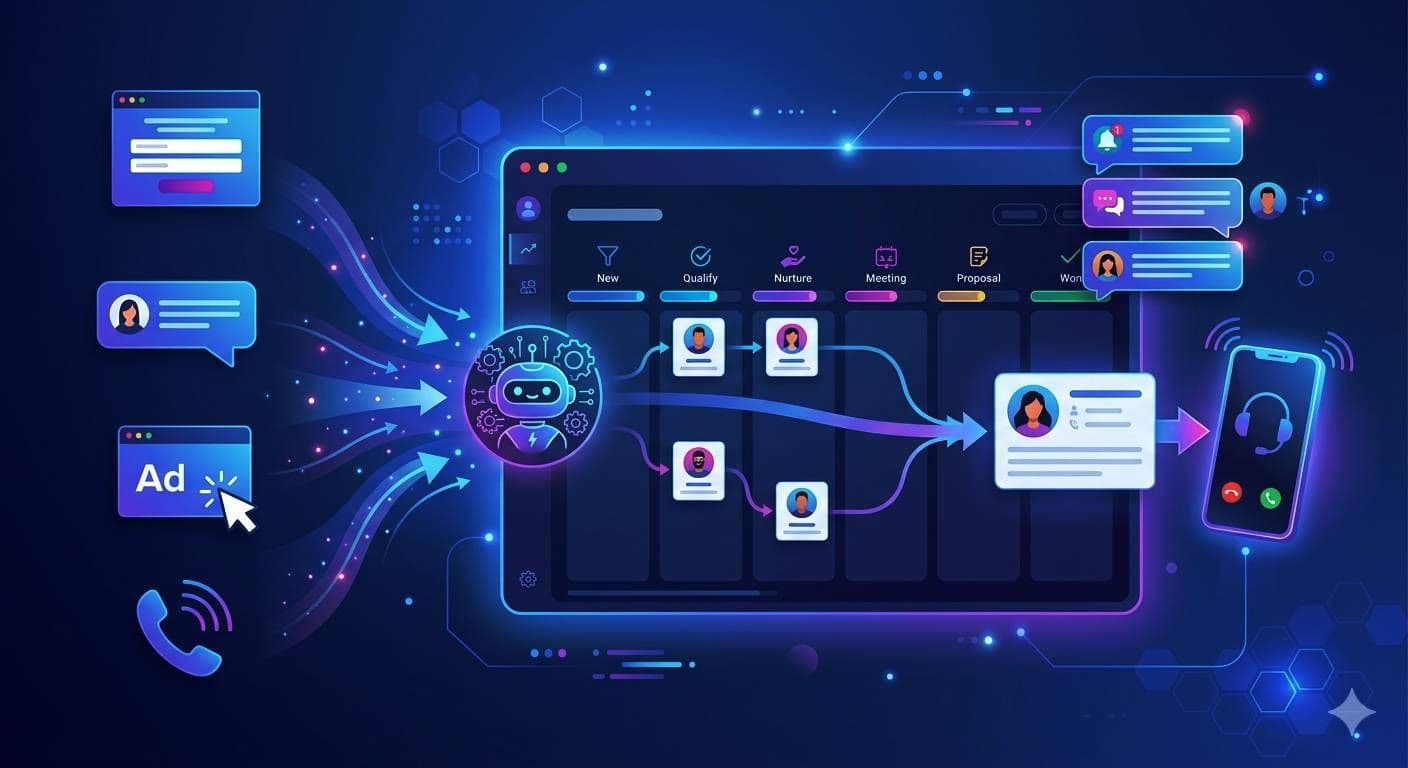
In practice, an automated lead follow-up system is a connected workflow that reacts to an inbound lead the instant it appears.
A complete system usually includes:
- instant form capture from website pages, landing pages, ads, and chat
- immediate acknowledgment by SMS or email
- automated calling or callback attempts
- qualification logic based on answers, source, or service type
- calendar booking for qualified leads
- routing to the right rep when human involvement is needed
- follow-up sequences if the first attempt does not connect
The key is not that these actions are digital.
The key is that they are immediate.
If your current setup still depends on a rep checking Slack, opening the CRM, or reviewing a queue before anything happens, you do not have an instant response system. You have a delayed manual workflow with software around it.
Why response delays keep getting introduced into normal sales workflows
Response delays are not usually caused by a single failure. They are created by design.
Most sales processes were built for order, not speed.
A company adds a CRM.
Then lead source tracking.
Then ownership rules.
Then qualification stages.
Then calendar coordination.
Each addition makes the process more structured. But it also creates one more dependency before the lead hears from someone.
This is especially common in businesses with multiple services, territories, or sales reps.
Each decision sounds reasonable.
Together, they create a lag.
That lag is why many companies struggle with manual lead follow-up even when they have good reps and solid demand.
A lead response process can be organized and still be too slow to convert.
What happens during the delay window
The delay window is the gap between submission and first meaningful contact.
That window is where lead value decays.
Take the storm-damage roofing example.
Right after submitting the form, the homeowner is actively solving the problem. They are near their phone. They are ready to answer questions. They are mentally available.
Thirty minutes later, they may be calling insurance.
Two hours later, they are back with family.
The next day, the issue feels less immediate, even if the roof still leaks.
Intent is not permanent. It is perishable.
That is why delay is so expensive.
This is also central to understanding why inbound leads go cold.
The business cost of systems that wait
A delayed response system does not just hurt contact rates. It distorts the entire revenue engine.
First, marketing performance looks worse
Strong intent gets blamed as poor lead quality.
Second, sales teams inherit weaker conversations
They are speaking to colder, less engaged prospects.
Third, forecasting becomes misleading
The pipeline looks full, but real conversion probability drops.
The first job of a follow-up system is not nurturing. It is preservation.
Why reminders are not enough
Many businesses try to solve this with alerts:
- email notifications
- Slack messages
- CRM tasks
- mobile push alerts
These improve visibility, not speed.
They still depend on human availability.
That is the difference between:
- reminder-based systems (still delayed)
- action-based systems (instant response)
What an effective delay-killing system looks like
1. The lead is captured instantly
No batching. No waiting.
2. The first response is triggered in seconds
SMS, call, or both.
3. Qualification happens immediately
Inside the response flow.
4. Booking is offered early
Before momentum drops.
5. Follow-up continues automatically
Across hours and days.
How AI helps eliminate response delays specifically
AI removes the dependency on human availability.
That is the bottleneck.
Not script quality.
Not rep motivation.
Not dashboards.
Availability.
If a lead arrives at 8:17 p.m., a traditional workflow waits.
An AI workflow responds instantly.
It can:
- ask questions
- collect details
- assess urgency
- move the lead forward
This is why AI-driven inbound lead response is so effective.
Practical ways to implement automated lead follow-up
Start with the first five minutes.
- connect all lead sources into one intake system
- trigger instant SMS on form submission
- add automatic call attempts
- ask 2–4 qualification questions via AI
- route after first contact begins
- follow up over 24–48 hours
The key sequence:
Respond first. Organize second.
Key takeaways
Automated systems are not just about efficiency.
They eliminate the waiting that kills conversions.
Strong systems:
- react instantly
- remove human delay
- qualify in real time
- enable immediate booking
- persist with follow-up
The goal is not better organization.
The goal is zero delay.
FAQ
What is an automated lead follow-up system?
A system that responds instantly to inbound leads using SMS, calls, qualification, routing, and booking.
How is it different from CRM notifications?
Notifications alert. Automation acts.
Do they work for small teams?
Yes. They help small teams respond like larger ones without extra hires.
Next step
Need a better follow-up system?
FusionSync keeps inbound leads moving with instant first response, qualification, and automated follow-up when the lead does not answer right away.
Where it works
View all use cases