
Email vs Phone vs SMS for Lead Response
Compare channels for responding to inbound leads.
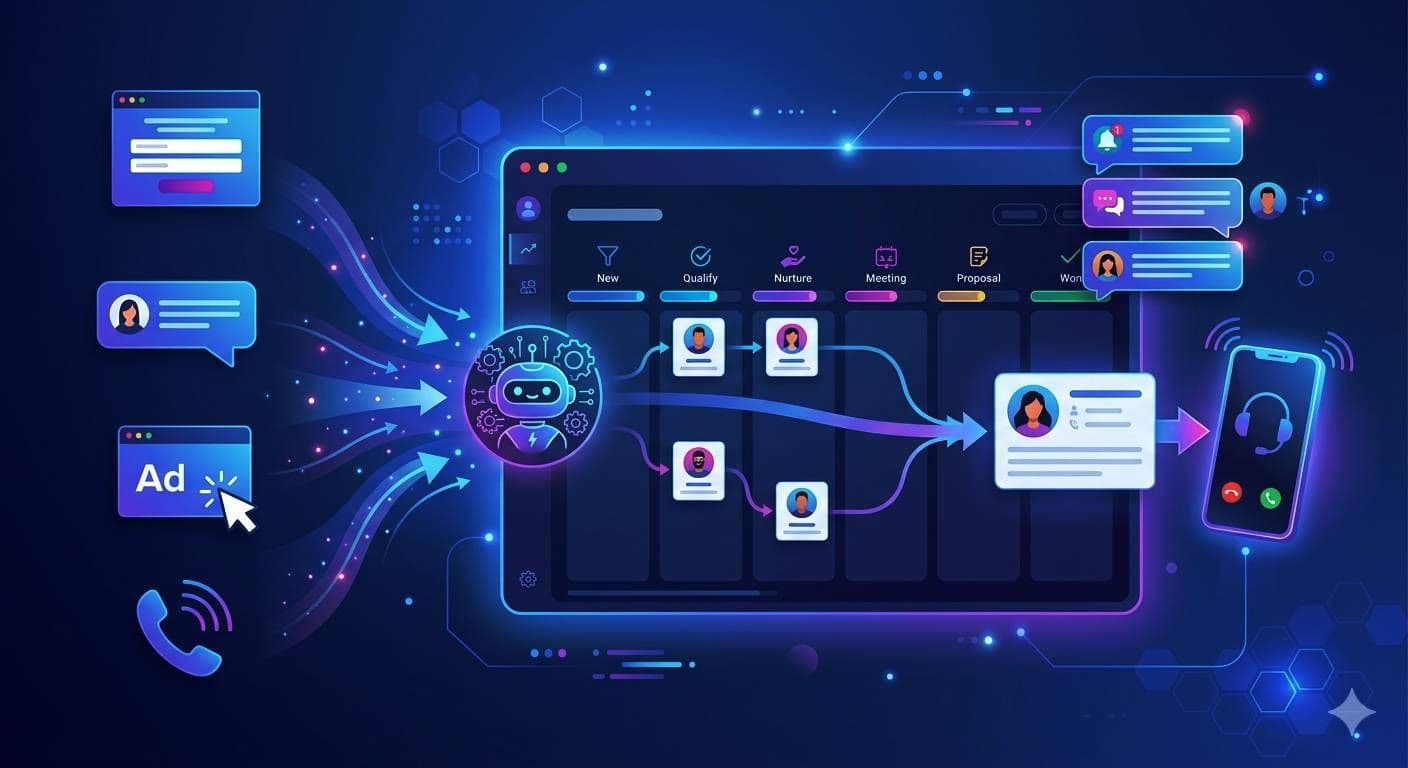
A roofing company in Phoenix was spending heavily on Google Ads after a monsoon storm.
Leads were coming in fast. Homeowners were filling out forms from their phones while standing in driveways, looking at leaks, broken tiles, and water damage.
The company did what many teams do. It sent an email first.
The message was polite, well-written, and completely ineffective.
Most of those homeowners never opened it in time. Some were still on the contractor comparison page. Some were waiting for a callback. Some had already moved on to the next company that texted them within a minute.
This is the real debate behind Email vs Phone vs SMS for Lead Response.
It is not just a question of preference. It is a question of speed effectiveness.
Which channel actually reaches the lead while intent is still hot?
Which channel creates a real conversation fastest?
Which channel gives your team the best chance of converting interest into an appointment?
Here is the hard truth: the best lead response channel is not the one that feels most professional internally. It is the one that collapses the time between inquiry and interaction.
That distinction matters because a fast message is not the same as a fast connection.
The real problem is not response activity. It is channel-to-connection speed.
Many companies think they responded quickly because a lead received an automated email within 30 seconds.
Operationally, that counts as a response.
Commercially, it often does not.
If the lead does not see it, read it, or act on it right away, the channel failed at the only moment that mattered.
That is the core issue when comparing Email vs Phone vs SMS for Lead Response. The question is not which channel can be sent fastest. All three can be triggered instantly with modern systems.
The question is which channel produces the fastest meaningful contact.
That is a different standard.
Email is often the easiest channel to automate. But it is usually the slowest channel to create an actual conversation.
Phone is the fastest route to a live interaction, but only if the lead answers.
SMS sits in the middle. It is immediate, highly visible, and often easier for leads to engage with in the moment.
So when businesses rely on the wrong first channel, they create hidden delay. Not delay in sending, but delay in connecting.
And that is where conversion loss starts.
Why channel choice changes speed effectiveness
Inbound leads do not experience your workflow the way your CRM does.
Your system may show:
- lead submitted at 2:01 PM
- email sent at 2:01 PM
- rep task created at 2:02 PM
From the company side, that looks efficient.
From the buyer side, nothing has happened yet.
They are still waiting.
Channel speed effectiveness depends on one thing: how likely the lead is to notice, engage, and continue within the same buying moment.
That is why channel choice matters so much.
Email usually requires the most steps from the lead:
- notice the inbox alert
- open the email app
- find the message
- read it
- decide to reply or click
Phone requires fewer steps if answered. The conversation starts immediately.
SMS is often even more frictionless at first contact. The lead sees the message on the lock screen, reads it quickly, and can respond with a short answer.
This is the mechanism many teams miss.
Speed is not only about delivery time. Speed is about interruption power.
A channel that interrupts attention quickly has higher speed effectiveness than a channel that quietly waits in an inbox.
That leads to a useful reframing:
The fastest lead response channel is the one that gets acknowledged first, not the one that gets sent first.
Email vs Phone vs SMS for Lead Response: which channel is actually fastest?
Let’s compare them based on response speed effectiveness, not habit.
Email is strong for documentation, detailed follow-up, proposals, and longer buying cycles.
But as a first-response channel for fresh inbound leads, it is often weak.
Why?
Because email is passive.
It waits for the lead to check it.
On desktop-heavy B2B motions, that can still work in some cases. But even there, inboxes are crowded and response timing is unpredictable. On mobile-driven leads, email is even less reliable as the first touch.
Email works best as a support channel after initial contact is established, not as the primary speed-to-connection tool.
Phone
Phone is the most aggressive channel for speed.
If a lead answers, qualification can begin instantly. A rep or AI voice agent can ask questions, confirm interest, and book an appointment in the same interaction.
That makes phone the highest-upside channel for immediate conversion.
But phone has one limitation: answer rates.
Many leads ignore unknown numbers. Some are at work. Some submitted the form in a setting where they cannot take a call.
So phone can be the fastest channel to a conversation, but it is not always the fastest channel to an acknowledged response.
SMS
SMS is often the most consistently effective first-response channel for speed.
It is seen quickly.
It feels current.
It allows low-friction engagement.
A lead can reply with one word.
They can confirm availability.
They can click a booking link.
They can ask a question without committing to a full call.
That combination makes SMS extremely strong when the goal is immediate acknowledgment and next-step momentum. It is one reason many teams use texting to improve early contact rates. FusionSync has covered this in more detail in its post on <a href="http://fusionsync.ai/posts/sms-lead-response-speed">how SMS improves early response speed</a>.
Why email often loses the first minute
Email feels safe because it is familiar and scalable.
But for speed effectiveness, it usually loses the first minute.
The reason is behavioral, not technical.
When a lead submits a form, they are usually still in research mode. They may still have your site open. They may still be comparing pricing pages. They may still be on their phone.
In that moment, inbox checking is not guaranteed.
Text visibility is.
A call is hard to miss.
Email, by contrast, slips into a queue of other messages. Even if opened later, that delay matters because the buying moment has already changed.
This is especially true for high-intent inquiries like:
- quote requests
- emergency service forms
- demo requests
- paid ad leads
These leads are not looking for a newsletter-style interaction. They want confirmation that someone is available now.
If your first touch is email-only, you may technically respond fast while functionally responding slow.
That gap is expensive.
The business cost of choosing the wrong first channel
Most teams measure response time in seconds or minutes.
Few measure time to conversation.
That is the metric channel strategy really affects.
If your process sends email first, then waits 15 minutes before a rep calls, your official response time may look excellent while your conversion window keeps shrinking.
That creates several downstream problems:
Lower contact rates
The lead may never engage with the first response at all.
Slower qualification
Without live interaction, you learn less about urgency, budget, fit, and timing.
Fewer booked appointments
A delayed connection means fewer chances to capture intent while motivation is highest. If booking speed is part of your funnel, see <a href="http://fusionsync.ai/posts/lead-response-appointment-booking">how response timing affects appointment-setting outcomes</a>.
More wasted paid spend
If you paid to generate the click, then used a channel that delays contact, part of your acquisition cost is being burned after the form fill.
This is one reason teams underestimate <a href="https://www.fusionsync.ai/posts/lead-response-time-5-minute-rule">why inbound leads go cold</a>. The issue is not only whether you responded. It is whether your first channel matched the speed of buyer intent.
A better way to think about channel sequence
The question is not whether email, phone, or SMS is best in the abstract.
The better question is: which channel should go first if speed effectiveness is the priority?
For most inbound flows, the practical sequence is:
- SMS immediately
- Phone call immediately after or in parallel
- Email as reinforcement
Why this order?
Because SMS gets seen.
Phone creates the fastest path to a live conversation.
Email supports credibility, detail, and future follow-up.
This is a sequencing problem more than a channel problem.
Many teams treat channels as alternatives. High-performing teams treat them as coordinated layers.
That is where multi-channel design becomes powerful. Not because more channels are always better, but because each channel plays a different role in speed. A broader framework for that appears in FusionSync’s guide to <a href="http://fusionsync.ai/posts/multi-channel-lead-response">multi-channel lead response strategies</a>.
How automation improves channel speed effectiveness
Humans are not the problem here.
Humans are simply not built to monitor every lead source every second and choose the right response channel instantly.
That is where automation changes the game.
A modern lead response system can trigger the best first-touch sequence the moment a form is submitted.
For example:
- an SMS goes out in seconds confirming receipt
- an AI voice agent calls right away to qualify the lead
- if the call is missed, a follow-up text offers a booking link
- an email arrives with supporting information and next steps
This is not about adding noise.
It is about removing idle time between intent and interaction.
Automation also solves consistency. Every lead gets the same fast, channel-aware response whether it arrives at 11 AM or 11 PM.
That matters because channel effectiveness drops sharply when timing slips. A phone call ten seconds after form submission feels relevant. The same call two hours later feels random.
AI makes this even more practical.
Instead of simply sending a message, AI systems can:
- ask qualifying questions
- route based on answers
- offer time slots
- book meetings automatically
- continue follow-up across SMS, phone, and email
In other words, automation does not just speed up sending. It speeds up movement.
Key takeaways
If your goal is conversion, do not judge channels by how fast they leave your system.
Judge them by how fast they create engagement.
Here is the practical takeaway from Email vs Phone vs SMS for Lead Response:
- Email is valuable, but rarely the best first channel for speed effectiveness
- Phone is the fastest path to a live conversation when answered
- SMS is often the most reliable first channel for immediate visibility and reply
- The best approach is usually coordinated: text first, call fast, email to support
- Automation and AI make that sequence happen instantly and consistently
One final insight worth keeping:
A response channel is only fast if the buyer feels it in real time.
That is why some companies think they have solved lead response when they have only solved message delivery.
The winners solve contact velocity.
FAQ
Is email ever the best first response for inbound leads?
Sometimes, especially in slower, more formal B2B sales cycles. But if speed effectiveness is the priority, email is usually better as a secondary channel after SMS or phone creates initial engagement.
Should sales teams call or text first?
In many cases, text first or text and call together works best. SMS gets immediate visibility, while phone creates the fastest route to qualification. The best sequence depends on your lead source, buyer behavior, and answer rates.
How does AI help with Email vs Phone vs SMS for Lead Response?
AI helps by choosing and triggering the right sequence instantly. It can send a text, place a call, qualify the lead, and book an appointment without waiting for a rep to become available. That improves channel speed effectiveness at the exact moment intent is highest.
Next step
Let's Fix Your Lead Response in 30 Minutes
We'll walk through your current lead flow, identify where leads are slowing down or getting missed, and show you exactly what can be automated to increase speed, conversations, and bookings.
Where it works
View all use cases