
Lead Response Time for Inbound Marketing Leads
Explore response speed benchmarks for inbound marketing leads.
A SaaS buyer downloads your comparison guide at 10:12 a.m.
At 10:16, they open the pricing page.
At 10:19, they read your case study.
At 10:23, they submit a demo form.
This is not a casual website visitor.
This is someone moving through a content journey in real time.
But your team treats that form submission like any other inbound inquiry. It sits in a queue until an SDR checks Salesforce after lunch. By then, the buyer has gone back to work, the research session is over, and the urgency that carried them from article to form has already faded.
That is the real issue behind Lead Response Time for Inbound Marketing Leads.
Content-driven leads do not go cold only because time passes. They go cold because their buying momentum is temporary. The lead exists inside a narrow window created by attention, context, and intent. If your response arrives after that window closes, you are not continuing a live conversation. You are trying to restart one.
That is a much harder sale.
A useful way to think about this is simple:
Inbound content leads are not just contacts. They are moments.
If you miss the moment, the lead feels colder than it actually is. What you really lost was context.
The Real Problem With Content-Driven Inbound Leads
Not all inbound leads behave the same way.
A referral lead may already know your company. A repeat buyer may already trust you. A form fill from a content journey is different. That person often arrives through a blog post, guide, webinar, landing page, or comparison asset while actively researching a problem.
That research session creates a very specific kind of intent.
It is fresh.
It is self-educated.
It is highly contextual.
And it decays fast.
This is why Lead Response Time for Inbound Marketing Leads deserves its own discussion instead of being lumped into generic speed-to-lead advice.
With content-driven leads, timing matters because the inquiry is attached to a live mental frame. The buyer is not just interested in your company. They are thinking about a particular pain point, a specific use case, and a defined set of options right now.
If you respond during that frame, the conversation feels relevant.
If you respond hours later, the same message feels random.
The issue is not only delay.
It is delay relative to a content-triggered decision window.
Why Timing Matters More for Content-Driven Intent
A paid ad click can create urgency.
A referral can create trust.
But content creates momentum.
That matters because momentum is fragile.
When someone reads a problem-aware article, then a solution page, then a form, they are building conviction step by step. Each piece of content answers a question and moves them one level deeper. By the time they convert, they are at peak clarity.
That peak does not last long.
Meetings start.
Slack messages arrive.
Other tabs open.
The buyer shifts from evaluation mode back to execution mode.
This is the hidden timing problem with inbound marketing leads. Your content did the expensive work of building intent, but your response process often acts as if that intent will still be there later.
Usually, it will not.
A slow reply to a content-driven lead is especially damaging because it breaks narrative continuity. The buyer was on a journey. They were connecting your insights to their problem. They were imagining a solution. If no one responds quickly, that narrative gets interrupted.
And once interrupted, interest does not always disappear. It just loses urgency.
That is the difference.
Lead Response Time for Inbound Marketing Leads Is Really About Context Retention
Most teams think about response time as an operational metric.
It is more useful to treat it as a context-retention metric.
A content lead who just downloaded a buyer's guide is easier to engage because the reason they reached out is still active in their mind. They remember the headline that pulled them in. They remember the use case they cared about. They remember what problem they wanted solved.
Wait too long, and that mental context degrades.
Now your rep has to rebuild what your content already created.
This is why two leads with the same job title and company size can behave very differently depending on when you respond. One is still in the research session. The other has already mentally exited it.
That creates a sharp but often invisible drop in contact quality.
The lead may still answer.
They may still book.
But the conversation starts from a lower-intent position.
This is also why lead response time matters far beyond SLA reporting. In content-led acquisition, speed determines whether sales inherits active intent or stale form data.
What This Looks Like in the Real World
Imagine a B2B marketing agency publishing a strong SEO article on pipeline attribution.
A revenue leader finds it through search, reads for seven minutes, clicks into a case study, then submits a contact form asking about analytics support. That is not a generic inquiry. It is an intent sequence driven by education.
If the agency replies in two minutes with a message that references attribution reporting and offers a short consult, the lead feels understood.
If the agency replies three hours later with a generic “Thanks for contacting us, when are you free?” email, the content momentum is gone.
Same lead.
Different timing.
Different outcome.
The common mistake is assuming every form fill has a stable level of intent. Content-driven inbound does not work that way. Intent spikes because the buyer is actively learning. Once that learning session ends, urgency drops even if interest remains.
That is why teams often misread these leads.
They say:
- “The lead looked good but never replied.”
- “The form submission was qualified but stalled.”
- “The content is generating conversions, but meetings are inconsistent.”
In many cases, the problem is not lead quality.
It is timing against a decaying context window.
The Business Cost of Missing the Content Window
When content programs underperform, companies often blame traffic, offer quality, or sales messaging.
But there is a simpler explanation in many funnels: marketing creates high-intent moments that operations fail to capture in time.
This has several downstream effects.
First, content ROI gets understated.
A blog, webinar, or downloadable guide may be doing its job extremely well. It is attracting the right audience and moving buyers toward action. But if lead handling is delayed, the final conversion rate makes the campaign look weaker than it really is.
Second, sales efficiency drops.
Reps spend more time chasing leads after the moment of clarity has passed. That means more reminders, more follow-ups, and more conversations that begin with “Can you remind me what this is about?”
Third, forecasting gets noisier.
Content-generated pipeline becomes inconsistent, not because demand is inconsistent, but because response timing is inconsistent. Teams start to distrust inbound performance when the real issue is the handoff speed.
Fourth, buyer experience suffers.
A person who just consumed several pieces of thoughtful content expects continuity. A delayed, generic response feels disconnected from the experience that brought them in.
If you want to understand why inbound leads go cold, this is one of the clearest examples. The delay does not just slow the process. It breaks the thread the buyer was following.
Behavioral Patterns That Make Content Leads Time-Sensitive
Content-driven inbound leads tend to share a few patterns.
They often convert during focused research sessions.
They usually interact with multiple assets before submitting a form.
They are more likely to compare solutions while consuming content.
They often convert when a specific question becomes urgent enough to act on.
All of that means their intent is cumulative and session-based.
That is the key mechanism.
A content lead is not simply saying, “I am interested.”
They are saying, “I am interested right now because of what I just learned.”
That is why the well-known benchmarks around fast follow-up become even more important in content-led funnels. If your team is trying to hit sub-five-minute performance, the five-minute rule for inbound leads is especially relevant when the lead came from a content sequence rather than a random contact page visit.
Another useful supporting concept is how response time affects inbound sales conversion. The shorter the delay, the more likely the sales conversation matches the prospect's current attention state.
How to Improve Response Timing for Content-Driven Leads
The fix is not just “follow up faster.”
The fix is to respond in a way that matches the content context that created the lead.
Here are the practical moves that matter most.
1. Trigger response based on content behavior
Treat a demo request after three page views differently from a generic inquiry.
If someone viewed a pricing page, a case study, and a comparison article before submitting, that should trigger a higher-priority response path. The lead is not just new. The lead is warmed by content.
2. Route with context attached
The first responder should know what content the lead consumed.
That includes:
- first-touch page
- last page before conversion
- asset downloaded
- campaign source
- high-intent pages viewed
Without this, the rep responds blindly and wastes the advantage marketing created.
3. Match the message to the learning journey
The first response should reflect what the buyer was exploring.
If the lead came through an article on reducing no-show rates, the reply should not sound like a generic thank-you email. It should continue that exact conversation.
4. Compress the first-touch window aggressively
For content-led inbound, minutes matter more than most teams realize.
A quick acknowledgement is good.
A fast human or AI-driven outreach tied to the asset consumed is better.
The goal is not speed for its own sake.
It is preserving the buyer's attention state.
How Automation and AI Solve This Exact Timing Problem
This is where automation becomes more than convenience.
For content-driven inbound leads, automation protects context.
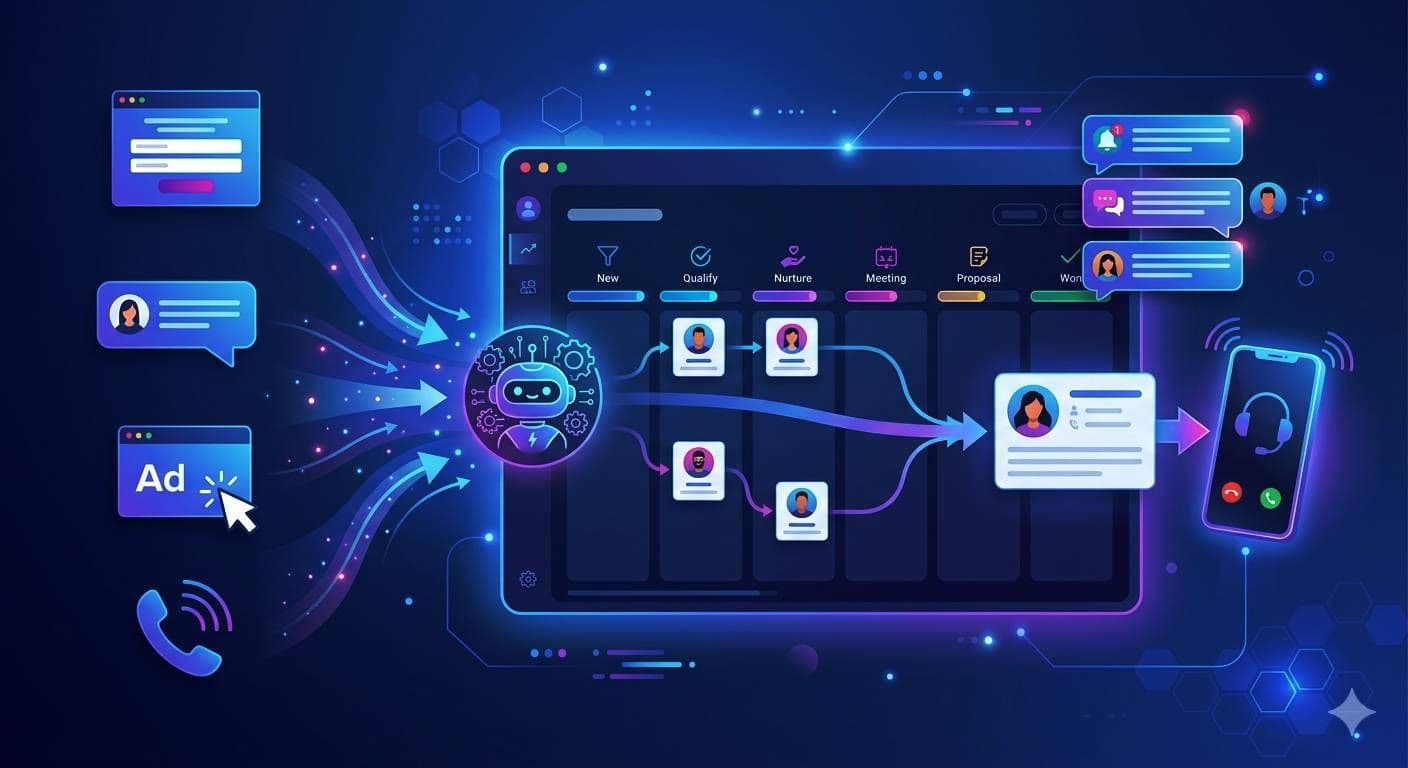
A properly configured system can:
- detect the form submission instantly
- identify the content path that led to conversion
- send an immediate personalized SMS or email
- launch an instant call attempt
- ask qualifying questions while intent is still active
- book a meeting before the research session ends
That changes the economics of inbound.
Instead of waiting for a rep to notice a new lead, the system acts while the prospect is still mentally in buying mode.
This is especially powerful for companies generating leads through SEO content, guides, webinars, and landing pages. Those channels create intent at scale, but only if the handoff happens fast enough.
AI is useful here not because it replaces your sales team, but because it closes the timing gap between marketing engagement and sales response. It turns content consumption into immediate conversation.
That is a major difference.
When the lead comes from content, the first response should feel like the next step in the same journey, not the start of a separate process.
Key Takeaways
- Content-driven inbound leads are highly time-sensitive because their intent is tied to a live research session.
- The core issue is not generic delay. It is losing the context created by content at the moment of conversion.
- Slow follow-up forces sales to recreate urgency that marketing had already built.
- Better response timing improves content ROI, rep efficiency, buyer experience, and meeting conversion.
- Automation and AI help by responding while the buyer's attention and problem awareness are still active.
The biggest insight is this:
For content-led acquisition, speed is not just response time. It is continuity.
That is why Lead Response Time for Inbound Marketing Leads should be treated as a strategic revenue issue, not a minor sales ops metric.
FAQ
What makes inbound marketing leads more time-sensitive than other leads?
Inbound marketing leads often convert during an active content journey. They have just read, watched, or downloaded something that increased buying intent. If your response is delayed, that context fades and the conversation becomes harder to start.
What is a good response time for content-driven inbound leads?
The closer to immediate, the better. For content-driven leads, the ideal window is within minutes, not hours. Fast follow-up works because it captures the lead while they are still engaged with the problem and your solution.
How can AI improve Lead Response Time for Inbound Marketing Leads?
AI can respond instantly after a form submission, reference the lead's content activity, qualify interest, and book a meeting automatically. That helps businesses preserve the momentum created by blogs, landing pages, webinars, and other content assets.
Next step
Want to fix slow lead response?
See how FusionSync responds in seconds, qualifies inbound leads, and moves them toward a booked next step automatically.
Where it works
View all use cases