
Why Instant Lead Response Is Becoming Standard
Learn why instant response is becoming the new expectation.
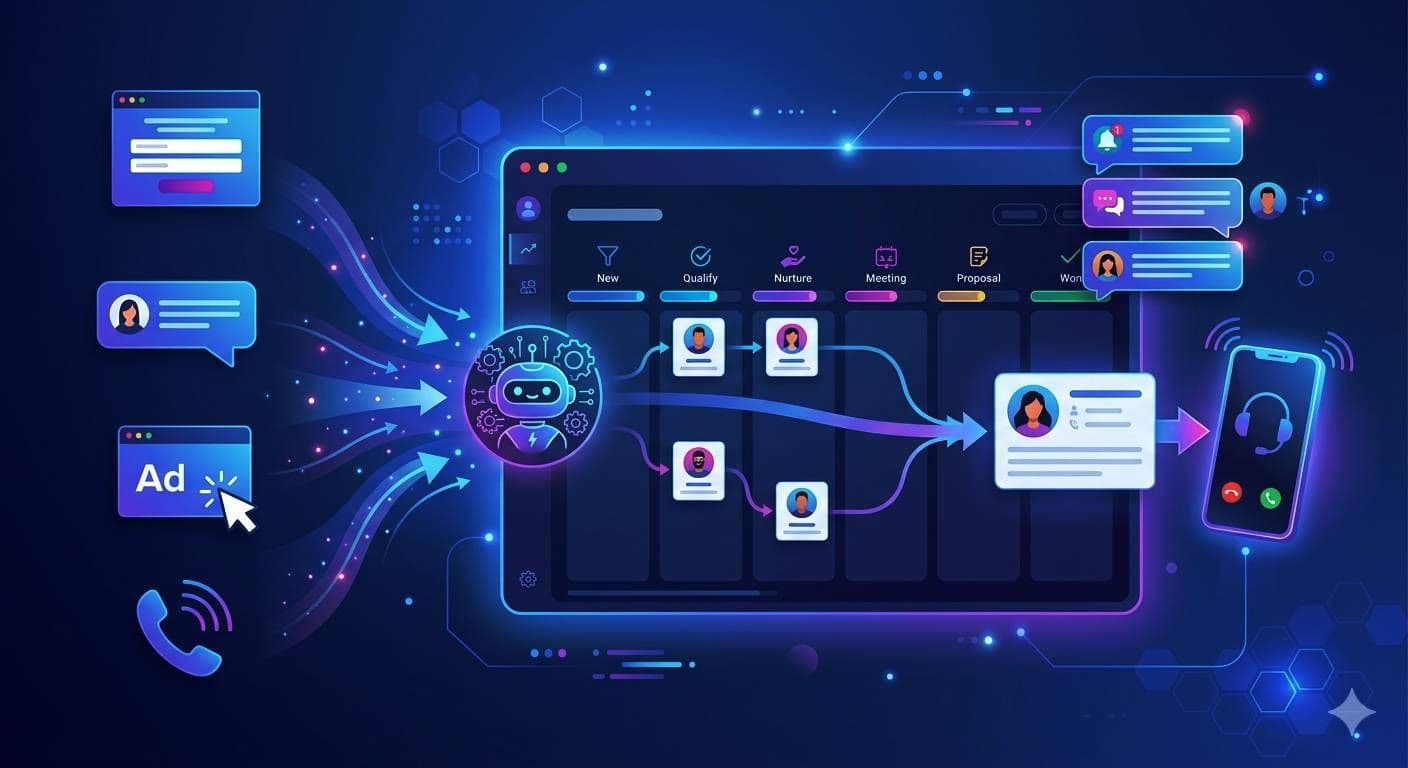
A homeowner clicks a Google ad for a local HVAC company at 9:12 p.m.
Their air conditioning just failed during a heat wave.
They land on the company’s website, fill out a quote form, and expect something to happen right away.
Not tomorrow morning.
Not after someone checks the CRM.
Not when the office opens.
Right away.
That expectation is the real story behind Why Instant Lead Response Is Becoming Standard.
For years, businesses treated fast follow-up as a sales best practice. Now buyers treat it as normal. That is a very different standard. When someone raises their hand online, they no longer compare your response time to your internal process. They compare it to every instant digital experience they have all day: rideshare apps, food delivery, live chat, banking alerts, same-day scheduling, and on-demand customer support.
The shift is subtle but important. Slow response is no longer just inefficient. It feels out of step with how modern buying works.
And that mismatch between buyer expectation and business response is exactly why so many inbound leads disengage.
The problem is not just delay. It is expectation failure.
Most businesses still think about lead response as an internal operations issue.
A form gets submitted.
A notification gets sent.
Someone follows up when available.
From the company’s perspective, that process may seem reasonable.
From the buyer’s perspective, it feels broken.
That is the key distinction.
When a prospect fills out a contact form today, they are not simply leaving a message. In their mind, they are starting a conversation. They expect acknowledgement, direction, and a next step with very little waiting.
If that does not happen, the lead does not always think, “This company is probably busy.”
They think:
- “Maybe this is not a priority for them.”
- “Maybe their service is slow too.”
- “Maybe I should keep looking.”
This is why buyer expectations matter so much. The lead is not judging your response in isolation. They are using speed as a signal.
Fast response signals competence.
Fast response signals availability.
Fast response signals that doing business with you will be easy.
Slow response suggests the opposite, even if your actual service is excellent.
A useful reframing is this:
Speed is no longer just operational. It is experiential.
That is why leads cool off so quickly. Not only because time passes, but because the experience immediately feels misaligned with what the buyer expected.
If you want a deeper breakdown of why inbound leads go cold, the core issue often starts in that first gap between intent and acknowledgement.
Why Instant Lead Response Is Becoming Standard in modern buying behavior
The standard changed because buyer behavior changed first.
People now research, compare, and act in compressed windows.
They may discover your business from a paid ad, read a few reviews, visit your pricing page, and submit a form in less than ten minutes. That same buyer may also message another provider, check a directory listing, and look at your competitors before they finish their coffee.
This does not necessarily mean they are impatient in a negative sense.
It means digital buying has trained them to expect momentum.
When they take action, they expect the process to continue.
When the process stops, confidence drops.
This is especially true for high-intent moments:
- requesting a demo
- asking for pricing
- booking a service estimate
- submitting a financing inquiry
- asking whether a provider serves their location
In each case, the buyer is not browsing casually. They are trying to move forward.
That is why instant response is becoming standard. It matches the pace buyers now expect when they are actively evaluating options.
Businesses often assume the buyer will stay in that decision mode for hours. In reality, most buyers move in bursts. They act when the need feels urgent, then shift attention quickly. If your business does not meet them in that moment, the buying window starts closing.
This is also why channels matter. A company investing in paid acquisition should pay close attention to how quickly Google Ads leads need a response. Buyers who convert from high-intent search usually expect the handoff from click to conversation to feel immediate.
The psychology behind the expectation shift
The expectation for instant response is not random.
It is learned behavior.
Modern buyers live in systems that constantly confirm action in real time.
Press a button and a car is assigned.
Place an order and tracking starts.
Open a banking app and the transaction appears instantly.
Book a haircut and a confirmation text arrives within seconds.
These experiences shape what “responsive” feels like.
So when a prospect submits a form to a business and hears nothing, the silence stands out more than it used to.
The problem is not that buyers suddenly became unreasonable.
The problem is that every other digital experience raised the baseline.
This has a direct effect on sales conversations. When businesses wait too long, buyers often interpret silence as uncertainty.
Not because they have proof.
Because their brain fills in the gap.
That creates friction before your sales team even speaks to them.
One of the most important insights here is this:
Leads do not only want answers fast. They want reassurance fast.
That reassurance can be simple.
- a text confirming receipt
- an immediate call
- a scheduling option
- a short qualification flow
What matters is not just speed for speed’s sake. What matters is preserving the buyer’s confidence that they made the right move by reaching out.
That is where many teams fall behind. They think a delayed but thoughtful reply is enough. But in a market shaped by instant digital interactions, delayed thoughtfulness often arrives after confidence has already weakened.
What this expectation gap costs businesses
When buyer expectations rise, old response habits become expensive.
Not always visibly at first.
You may still get leads.
You may still close some deals.
You may still assume the funnel is working.
But underneath that, the expectation gap reduces performance in several ways.
First, form completion stops being the true conversion point.
The real conversion point becomes the first meaningful interaction after the form.
If that interaction feels delayed, the value of the lead drops fast.
Second, your marketing appears less effective than it really is.
Teams often blame lead quality when the real issue is a broken post-conversion experience. The lead may have been good. The response experience just did not match what the buyer expected.
Third, sales conversations start colder.
By the time a rep reaches out, the buyer is no longer in the same decision state. The rep is now trying to recreate urgency instead of working with existing urgency.
Fourth, brand perception takes a hit.
Even if the buyer never replies, they have already formed an impression: this company feels slow, hard to access, or less organized.
That is why response speed has become tightly connected to customer experience. A helpful resource on this is how delayed lead response affects customer experience.
The revenue impact is real, but the deeper issue is positioning. A slow first touch makes the business feel less modern than the buyer expected.
The old sales assumption no longer works
There used to be an assumption that serious buyers would wait.
That assumption came from an earlier buying environment where slower communication was normal. A website form was more like an email inbox. Buyers expected delay because delay was built into the experience.
That is no longer true.
Today, buyers treat many inbound actions as live requests.
They may not expect a full consultation in 30 seconds.
But they do expect movement.
This is the operational trap many businesses fall into. They built follow-up systems for an older expectation model, while buyers moved to a newer one.
So the business thinks:
“We responded within a few hours. That is fine.”
The buyer experiences:
“This felt unresponsive.”
That gap is where opportunities disappear.
A strong takeaway for sales leaders is this:
The market does not reward your process. It rewards the buyer’s experience of your process.
That is why instant lead response is becoming less of a nice-to-have and more of a baseline requirement.
How to adapt to rising buyer expectations
If the real problem is expectation failure, the solution is not just faster outreach in theory.
It is designing a response experience that feels immediate from the buyer’s perspective.
That starts with a few practical shifts.
1. Treat every inbound form as the start of a live conversation
Do not design your workflow like someone left a voicemail.
Design it like someone opened a door.
That means the buyer should receive immediate acknowledgement and a clear next step. Even a simple response that confirms timing, asks one qualifying question, or offers scheduling preserves momentum.
2. Match response design to buyer intent
Not every lead source carries the same expectation.
A newsletter signup can wait.
A pricing request usually cannot.
A demo request should feel almost immediate.
The closer the buyer is to a decision, the more important instant engagement becomes.
3. Remove dead air from the first 60 seconds
Silence is what creates doubt.
A buyer should never wonder whether their submission disappeared into a system. Confirmation texts, automated calls, and instant qualification flows eliminate that uncertainty.
4. Make access feel easy
Modern buyers expect convenience along with speed.
If your first response creates more waiting, more back-and-forth, or more uncertainty, it still feels slow.
The best response experiences make the next action obvious:
- answer a few questions
- pick a meeting time
- confirm service area
- connect now
How automation and AI solve this exact expectation problem
This is where automation becomes more than efficiency software.
It becomes expectation-matching infrastructure.
AI-powered lead response systems help businesses meet buyers in the moment they are ready, not later when a rep becomes available.
For example, when a prospect submits a form, an automated system can:
- respond instantly by SMS
- call the lead within seconds
- ask basic qualification questions
- route the inquiry correctly
- offer appointment times immediately
- trigger follow-up if the first attempt gets ignored
That matters because it recreates the kind of responsive experience buyers already expect everywhere else.
The goal is not to replace human sales conversations.
The goal is to protect the moment before buyer confidence fades.
This is why more businesses are adopting tools built for instant lead response workflows. The technology aligns the first touch with modern buyer expectations, which is now a core part of conversion performance.
In practical terms, AI gives your business a way to be available at the exact moment intent appears.
That is the standard buyers increasingly assume.
Key takeaways
Buyer expectations have changed faster than most sales processes.
That is the central reason instant response is becoming standard.
People no longer see a contact form as a passive request.
They see it as the beginning of an active interaction.
When that interaction does not continue quickly, trust weakens.
Confidence drops.
The buying window narrows.
The biggest insight is simple:
Instant response is not just about being first. It is about feeling current.
Businesses that adapt to that expectation create smoother buyer experiences, stronger first impressions, and more conversion-ready conversations.
Businesses that do not adapt may still generate leads, but they will increasingly lose momentum in the gap between interest and response.
That is ultimately Why Instant Lead Response Is Becoming Standard.
FAQ
1. Why do buyers expect instant lead response now?
Because most digital experiences already work that way. Buyers are used to immediate confirmations, live scheduling, and real-time updates. When they contact a business, they carry those expectations with them.
2. Is instant response necessary for every type of lead?
No. It matters most for high-intent inbound actions like demo requests, quote requests, service inquiries, and pricing forms. The stronger the purchase intent, the stronger the expectation for immediate engagement.
3. How can a business respond instantly without hiring more staff?
By using automation and AI to handle the first touch. That can include instant SMS, automatic calls, qualification workflows, lead routing, and appointment booking before a salesperson steps in.
Next step
Want to fix slow lead response?
See how FusionSync responds in seconds, qualifies inbound leads, and moves them toward a booked next step automatically.
Where it works
View all use cases