
How Lead Response Time Impacts Conversion Rates
Discover the relationship between response time and conversion rates.
A homeowner in Phoenix clicks a Google ad for "same-day AC repair."
It is 4:42 PM.
Their house is getting hotter by the minute, the family is coming home soon, and they fill out a form on three HVAC websites in less than four minutes.
One company sends an email that says, "Thanks, we'll be in touch."
Another does nothing for an hour.
The third calls in 38 seconds, confirms the issue, asks a few qualifying questions, and books a technician visit for that evening.
That sale was not won because of better branding, a prettier website, or a smarter ad campaign.
It was won because timing changed the buyer's behavior before the other companies even entered the conversation.
That is the clearest way to understand How Lead Response Time Impacts Conversion Rates. Conversion is not just about whether you respond. It is about whether you respond while the buyer is still in the same decision window.
Here is the important reframing: speed is not just operational. Speed is behavioral.
A lead does not convert because your team eventually replies. A lead converts because your response reaches them while intent, attention, and willingness to act are still high.
The real problem is not delay by itself
Most companies describe lead response as a workflow issue:
- A form comes in.
- A rep gets notified.
- Someone checks the CRM.
- A follow-up happens later.
But that framing is too internal.
The real problem is external. The buyer's state changes over time, and that change happens fast.
A lead at minute one is not the same lead at minute thirty.
That is the core cause-and-effect relationship behind conversion loss.
When someone submits an inbound form, they are usually in an active decision moment:
- They are comparing options
- Checking pricing
- Trying to solve a problem now
In those first minutes, they are mentally available.
They are expecting contact.
They are ready to answer a call or reply to a text.
As time passes, that state decays:
- They go back to work
- They get distracted
- They postpone the decision
- They forget which company was which
- They become less emotionally committed to solving the problem immediately
So the issue is not simply that slower response is "bad."
The issue is that response time changes the probability of action at each minute that passes.
If you want a deeper benchmark perspective, this breakdown of lead response time benchmarks for B2B companies helps show how quickly performance drops once teams move out of the early response window.
How Lead Response Time Impacts Conversion Rates in practical terms
To understand How Lead Response Time Impacts Conversion Rates, think of conversion as a chain with three stages:
- Contact
- Conversation
- Commitment
Response time affects all three.
1. Faster response increases contact probability
Right after a form fill, the lead still has their phone nearby.
They remember submitting the request.
They are more likely to pick up because the outreach feels connected to an action they just took.
If the same call comes two hours later, it feels colder. Even though the lead was originally inbound, the experience now resembles outbound interruption.
That single timing shift lowers connect rates.
2. Faster contact improves conversation quality
When the response is immediate, the lead still remembers what triggered the inquiry:
- They can explain the problem clearly
- They can answer qualifying questions
- They can compare timelines, pricing range, or service needs while motivation is still fresh
When contact is delayed, the conversation gets weaker:
- "Remind me what this is about again?"
- "I'm in the middle of something, can you call back tomorrow?"
Same lead source. Same product. Same sales rep.
Different timing. Lower conversation quality.
3. Better conversations create more commitment
Good conversion rates come from momentum.
When a lead in high intent is contacted quickly, the next step happens naturally:
- A quote gets requested
- A demo gets scheduled
- A site visit gets booked
Fast response preserves motion.
Slow response forces the seller to recreate urgency that already existed earlier.
That is much harder.
This is why many teams think they have a lead quality problem when they actually have a timing problem.
The lead did not become low quality first. The delay made the interaction lower quality.
Why timing changes buyer behavior so quickly
There is a specific mechanism behind this.
Inbound conversion is heavily influenced by what psychologists would call short-lived action readiness.
A person does not fill out a form in a neutral state. They do it when attention, problem awareness, and willingness to act briefly line up.
That alignment fades.
In practical sales terms, three timing-based shifts happen:
Attention collapses
A fresh lead is focused on solving one problem.
Ten minutes later, email, meetings, kids, errands, or other tasks take over.
Once attention shifts, your response has to fight for space instead of simply meeting existing intent.
Decision energy drops
Immediately after a form submission, a buyer has already crossed a small psychological threshold. They have decided to engage.
That matters.
But decision energy is temporary. If nothing happens next, the brain deprioritizes the choice. What felt urgent starts feeling optional.
Friction rises with each minute
At first, taking the next step is easy:
- Answer the phone
- Confirm details
- Book time
Later, the next step feels heavier. Now the lead has to context-switch, remember the issue, reassess vendors, and make time for a conversation they were ready to have earlier.
That is a major part of why inbound leads go cold.
They do not usually disappear all at once. They become incrementally harder to engage because timing increases friction minute by minute.
The business impact of delayed response is cumulative
When teams talk about lead response, they often think in isolated examples:
- One missed call here
- One late follow-up there
But the impact compounds across the funnel.
Imagine a company gets 300 inbound leads per month.
- If fast response lets them connect with 45 percent of leads, but delayed response drops that to 25 percent, that is not a small efficiency issue. That is a structural conversion gap.
Then apply the next layer.
- Of the leads you do reach, the delayed group is less prepared, less engaged, and less likely to book.
So the loss happens twice:
- Fewer leads are reached
- Fewer of the reached leads move forward
That means response time affects top-of-funnel contact rates and mid-funnel conversion rates at the same time.
This is why speed often improves pipeline without any increase in lead volume.
An important insight here: slow follow-up does not just reduce conversion. It changes the composition of your pipeline.
The leads who remain are often the most persistent, not necessarily the best fit.
So delayed response can quietly distort sales forecasting, qualification patterns, and close rates downstream.
Real-world pattern: urgent channels punish delay faster
Not all inbound sources decay at the same speed.
- A newsletter signup may tolerate some delay
- A high-intent request usually will not
Paid search leads, quote requests, service inquiries, and demo forms are especially sensitive because the buyer is already in motion. These leads are often comparing multiple options in one session.
That is why companies spending aggressively on paid acquisition should study why Google Ads leads require instant response.
The click is expensive, but the real waste happens when the follow-up arrives after the intent window has already narrowed.
Teams blame ad quality.
They blame landing pages.
They blame lead quality.
Sometimes the simpler truth is this: the campaign generated intent, but the handoff missed the moment.
The clearest signals that response time is hurting conversion
You can usually spot this issue in a few patterns:
Leads answer less often than expected
If inbound form leads rarely pick up, the problem may not be messaging. It may be that the call is arriving too late to feel relevant.
Reps hear "call me later" constantly
That often means the conversation is reaching the lead after their action window has closed.
Demo or appointment rates lag behind lead volume
You may be generating enough demand, but losing momentum between inquiry and first contact.
Marketing and sales disagree about lead quality
Marketing sees form fills. Sales sees low engagement. Timing often explains the gap.
Practical ways to improve timing at the moment it matters
If the problem is timing, the solution must focus on compressing the minutes immediately after form submission.
Not vague improvements.
Not "we should follow up faster."
Actual response design.
1. Trigger outreach instantly
The first action should happen in seconds, not hours.
That can be a call, text, or acknowledgment message that confirms receipt and starts engagement while intent is still active.
2. Remove waiting between capture and assignment
Manual review creates dead time.
If the lead has to wait for someone to notice the submission, you are already losing the highest-conversion window. Routing should happen automatically.
3. Match the first channel to immediacy
For high-intent leads, phone and SMS usually preserve momentum better than email alone.
Email can support the process, but it should not be the only first move when timing is critical.
4. Ask qualifying questions early
Qualification should happen during the initial contact window, not after a long delay.
The more you learn while the lead is engaged, the easier it is to move directly into the next step.
A useful companion here is how to qualify inbound leads quickly, especially if your current process separates response from qualification and loses momentum in between.
How automation solves this exact conversion problem
This is where automation becomes more than convenience.
It becomes timing infrastructure.
If conversion drops because buyer intent decays minute by minute, then your system needs to act before that decay does its damage.
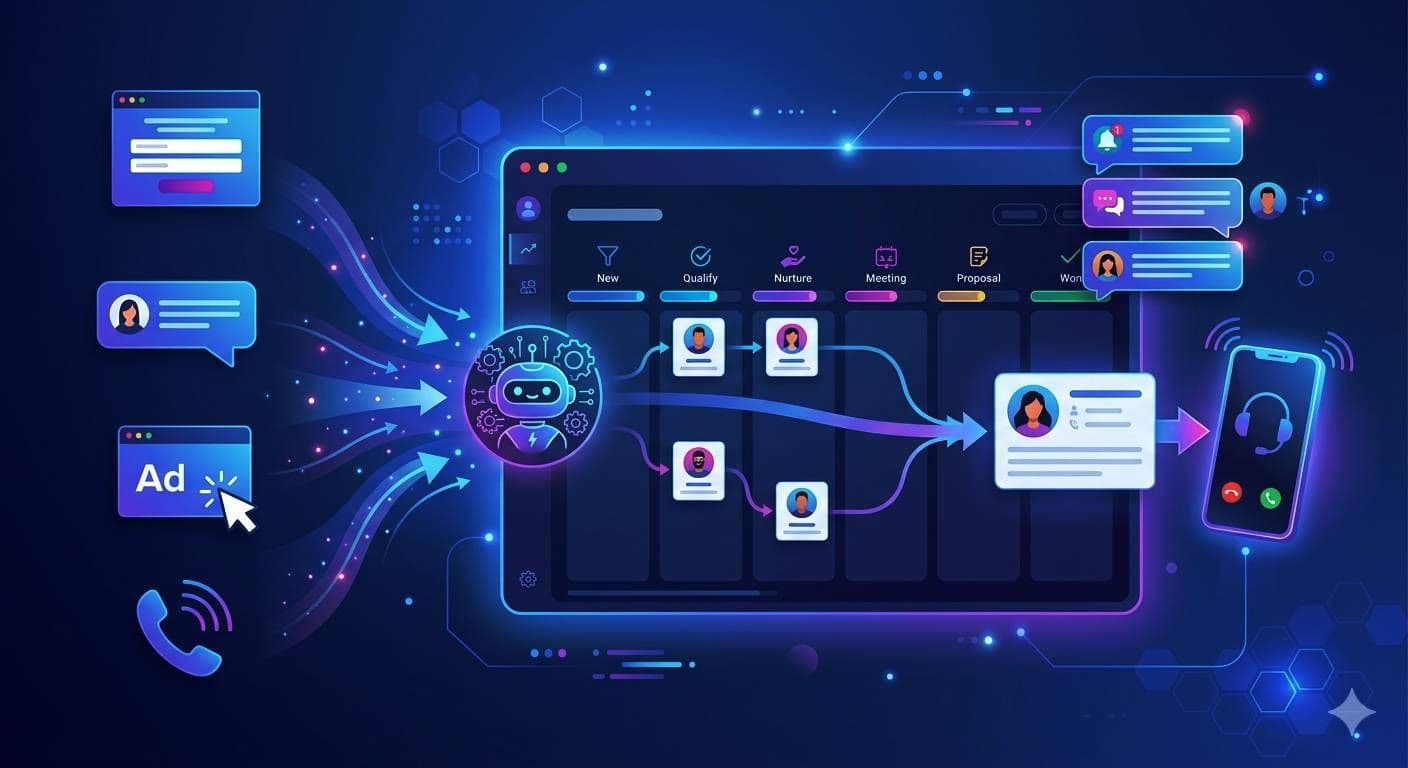
- The lead fills out a form
- The system responds instantly
- The lead gets called or texted
- Basic qualification starts immediately
- The meeting link is offered while interest is still high
- Follow-up continues automatically if the first attempt is missed
AI strengthens this further because it can engage every lead the moment they arrive, regardless of time of day, rep availability, or queue volume.
That matters because human teams are uneven by nature. They are in meetings. They are driving. They are busy. They are offline.
AI is consistent.
And consistency is what protects the conversion window.
For companies like FusionSync, this is the real value of AI-powered instant lead response.
It is not just about being faster in a general sense. It is about preserving the exact buyer state that makes conversion possible.
Key takeaways
- Conversion rates drop as response time increases because buyer intent changes quickly after form submission.
- The first minutes matter most because contact feels relevant, expected, and easy.
- Delayed response lowers contact rates, weakens conversations, and reduces commitment to next steps.
- Many lead quality problems are actually timing problems in disguise.
- Automation and AI improve conversion by protecting the narrow window when attention and willingness to act are highest.
Conclusion
The simplest explanation for How Lead Response Time Impacts Conversion Rates is this: time changes the lead before your sales team ever speaks to them.
In the first few minutes, the lead is available, focused, and ready.
Later, that same lead is distracted, less committed, and harder to move.
That is the cause-and-effect relationship sales teams need to understand.
Response time is not just a metric on a dashboard.
It is the force that determines whether inbound intent turns into a live conversation or fades into a missed opportunity.
When businesses shorten response time, they do not just move faster operationally.
They preserve buyer momentum at the exact moment conversion is most likely.
FAQ
1. What is the ideal lead response time for higher conversion rates?
For most inbound leads, the strongest conversion window is within the first five minutes.
The sooner the response happens, the more likely the lead is to answer, engage, and take the next step.
2. Why do conversion rates fall so quickly after a lead submits a form?
Because the buyer's attention and urgency are highest right after submission.
As time passes, distractions increase, decision energy drops, and the effort required to re-engage becomes higher.
3. Can automation really improve conversion rates, or does it just save time?
It can do both.
Automation saves time, but more importantly, it protects the initial intent window.
That means more leads get contacted while they are still ready to talk, which directly supports higher conversion rates.
Next step
Want to fix slow lead response?
See how FusionSync responds in seconds, qualifies inbound leads, and moves them toward a booked next step automatically.
Where it works
View all use cases