
How SMS Improves Lead Response Speed
Learn how SMS improves response engagement.
A roofing company in Phoenix was paying heavily for storm-season leads.
The ads were working. Homeowners were filling out quote forms from their phones, often while standing in the driveway looking at visible damage.
But the owner kept hearing the same frustrating pattern from his team: “The lead never picked up when we called back.”
On paper, the response process looked fine. A rep would review the form, call when available, leave a voicemail, and send an email if there was no answer.
The real problem was simpler.
The lead was still on their phone when they submitted the form, but the business answered that moment with channels that demanded more effort. A phone call could feel intrusive. An email could sit unopened. What the lead was most ready to engage with was a quick text.
That is the practical lesson behind How SMS Improves Lead Response Speed. SMS is not just another follow-up option. It is often the fastest path from form submission to actual engagement because it matches buyer behavior in the moment intent is highest.
And in inbound sales, speed is not just about sending something first. It is about starting a real conversation with the least friction possible.
The problem is not only response time. It is response friction.
Many businesses think they have a timing problem when they actually have a channel problem.
A lead fills out a form. The business replies within a few minutes. Management assumes the lead was handled quickly.
But if that response is a missed call and an unread email, nothing meaningful has happened.
The lead has technically been contacted, but not truly engaged.
SMS changes that because it reduces the effort required to respond. A text is visible immediately, easy to scan, and easy to answer with a short reply. The lead does not need to stop what they are doing, listen to a voicemail, open an inbox, or schedule mental space for a call.
That matters because inbound intent is brief and fragile. When someone requests information, they are usually in motion. They may be at work, between meetings, in a store, or comparing vendors on their phone. The channel that wins is often the one that feels easiest to answer right now.
Here is the sharper insight:
Fast follow-up is overrated if the channel creates hesitation. The best response is the one a lead can answer in five seconds.
That is where SMS becomes a speed advantage, not just a communication preference.
How SMS Improves Lead Response Speed in real buying moments
To understand How SMS Improves Lead Response Speed, look at what happens in the first few minutes after a form submission.
The lead is still mentally connected to the problem.
They remember why they reached out.
They recognize the context.
They are still holding the phone they used to submit the form.
SMS fits that moment almost perfectly.
A text can:
- confirm the inquiry instantly
- ask one simple qualifying question
- offer a booking link
- create a low-pressure path to reply
Compare that with other channels.
A phone call asks for immediate attention and may be ignored if the lead is busy or cautious about unknown numbers. An email asks the lead to shift into inbox mode, which usually happens later, if at all.
SMS meets the lead in the same environment where the inquiry started.
That is why text messaging often accelerates not just first contact, but first interaction.
If you are looking at response performance, this distinction matters. A two-minute SMS that gets a reply beats a one-minute call that gets sent to voicemail. Engagement speed matters more than outreach speed.
This is also why teams exploring <a href="http://fusionsync.ai/posts/email-phone-sms-lead-response">the differences between email, phone, and SMS for lead response</a> often find that SMS plays a unique role early in the process. It is not always the only channel, but it is frequently the fastest one for getting the lead to respond.
Why leads answer texts faster than calls or emails
There is a behavioral reason SMS works so well.
Text messages feel lightweight.
That sounds minor, but in lead response it is decisive.
A call feels like a commitment. Even when the lead is interested, answering may mean starting a live sales conversation before they are ready. Many prospects delay that step, not because they are unqualified, but because the timing is inconvenient.
Email has the opposite problem. It feels low pressure, but too easy to postpone. It gets buried under newsletters, internal messages, and promotions.
SMS sits in the middle.
It is immediate enough to get noticed and casual enough to invite a reply.
A lead can answer with:
- “Yes, tomorrow works.”
- “Can you text me pricing?”
- “I’m at work. Call after 4.”
- “Need help for a property in Mesa.”
Those short replies create momentum. And momentum is what most inbound workflows lose.
The important mechanism here is not just deliverability or open rate. It is conversational accessibility. SMS lowers the psychological threshold for engagement.
That is especially valuable for mobile-heavy lead sources like Facebook ads, local service forms, and landing pages. In those environments, the path from interest to inquiry already happens on a phone. Texting simply continues the conversation in the same mode.
What poor SMS usage costs the business
When companies underuse SMS, they often misread what is happening.
They assume the lead was low quality.
They assume the market is price shopping.
They assume the campaign underperformed.
But sometimes the issue is that the business chose channels with too much friction in the first response window.
That creates several costly outcomes.
Lower contact rates
If first outreach depends mostly on calls and emails, more leads stall before the first two-way interaction. The sales team logs activity, but the pipeline does not move.
Slower qualification
SMS can capture key details quickly. A simple text can clarify timeline, location, urgency, or service need in a few minutes. Without that, qualification gets delayed until a call connects, which may take hours or days.
Fewer booked appointments
Leads who respond by text are easier to guide into the next step. A booking link sent by SMS often gets faster action than one buried in email. This is one reason businesses focused on <a href="http://fusionsync.ai/posts/fast-response-meeting-bookings">increasing meeting bookings through faster response</a> often add texting early in the flow.
Wasted paid acquisition
If you paid for the click, the form fill, or the lead submission, then every missed text opportunity increases acquisition waste. The marketing spend worked. The engagement channel did not.
That is a subtle but important distinction.
SMS is not just faster to send. It is faster to move the sale forward.
A common mistake is measuring speed as “time to first outbound action.”
That is too shallow.
What matters is time to meaningful progress.
SMS is powerful because it compresses multiple steps:
- acknowledgement
- first engagement
- basic qualification
- scheduling
A well-timed text can do all four.
For example:
“Hi Jenna, thanks for requesting a quote for window replacement. Are you looking for a single home project or multiple units? I can help you book a time here.”
That one message confirms receipt, starts qualification, and opens the path to scheduling.
This is why SMS belongs in any serious discussion of <a href="http://fusionsync.ai/posts/multi-channel-lead-response">multi-channel lead response strategies</a>. It is often the bridge between the instant acknowledgement and the higher-commitment call.
The sequence matters.
Text first to get engagement.
Call when the lead is responsive.
Use email to support the process with details and documentation.
When businesses reverse that order, they often create unnecessary delay.
Where SMS works best in the lead response workflow
SMS is most effective when used immediately after form submission, not as a last resort.
That first message should do one job clearly: make it easy for the lead to answer.
The best texts are short, specific, and actionable.
Good examples:
- “Thanks for reaching out. Are you looking for service this week or next week?”
- “Got your demo request. Want to book a time now, or should we text over a few options?”
- “Thanks for contacting us. Is this for your home or business location?”
Notice what these messages avoid.
They do not overload the lead with information.
They do not sound scripted.
They do not demand a full conversation immediately.
They invite a simple reply.
That is the real speed advantage of SMS. It helps the lead take the next micro-step while interest is still active.
If you want a broader understanding of timing expectations, it also helps to compare this channel strategy with the benchmarks discussed in <a href="http://fusionsync.ai/posts/good-lead-response-time">what counts as a good lead response time for sales teams</a>.
How automation and AI make SMS actually work at scale
Most teams agree that texting works.
The problem is consistency.
Manual texting breaks down quickly. Reps get busy. Messages are delayed. Follow-ups become inconsistent. Some leads get immediate attention, while others wait until someone remembers.
That inconsistency cancels out the core value of SMS.
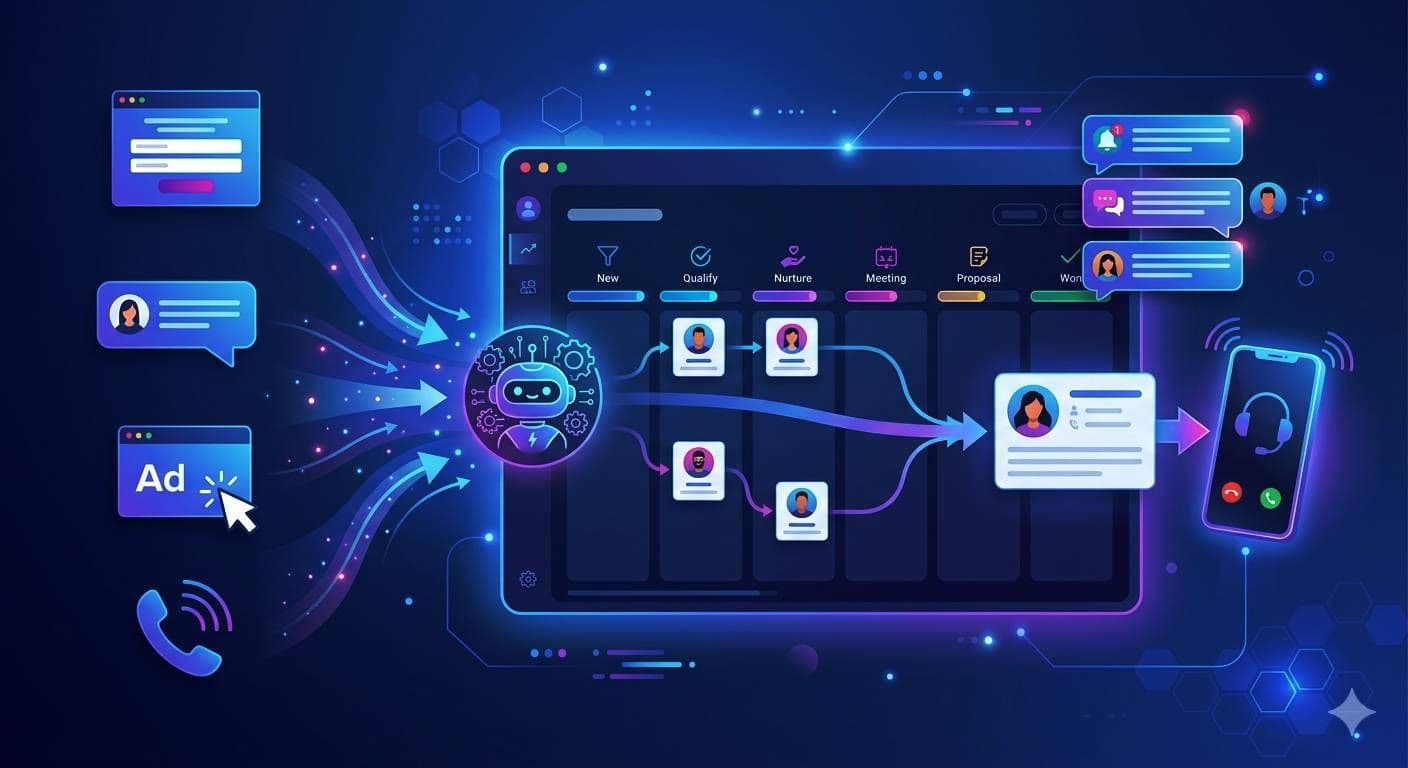
Automation fixes that by triggering a text the moment a lead submits a form. No inbox check. No handoff delay. No rep availability issue.
AI takes it a step further.
Instead of sending a generic acknowledgment, an AI-powered system can:
- send an instant personalized SMS
- ask qualifying questions based on the form type
- interpret the lead’s reply
- offer booking options automatically
- trigger a call when the lead shows high intent
- continue follow-up if the lead goes silent
This is where SMS stops being just a messaging feature and becomes part of a response system.
For businesses trying to understand <a href="https://www.fusionsync.ai/posts/lead-response-time-5-minute-rule">why inbound leads go cold</a>, this matters because the issue is rarely that no one cared. It is that the response method did not match the speed and simplicity the buyer expected.
Automation closes that gap.
And because texting feels natural to the buyer, the system can create immediate traction without sounding aggressive.
Key takeaways
SMS improves lead response speed because it reduces reply friction at the exact moment inbound intent is highest.
It works especially well when the lead submits a form on mobile and wants a fast, low-effort next step.
The real advantage is not just faster outreach. It is faster engagement.
Businesses that rely only on calls and emails often mistake activity for responsiveness. But a voicemail is not a conversation, and an unread email is not progress.
SMS gives leads an easier way to respond, qualify themselves, and book the next step.
When paired with automation and AI, it becomes a reliable part of a modern speed-to-lead system.
That is the clearest takeaway from How SMS Improves Lead Response Speed: the best response channel is the one that makes answering effortless.
FAQ
Is SMS better than calling a lead first?
Not always in every situation, but SMS is often better for first engagement because it is easier to answer immediately. A text can warm the conversation and make the eventual call more likely to connect.
When should a business send the first SMS after a form submission?
Ideally within seconds. The value of SMS is highest when it reaches the lead while they still remember the form submission and are actively thinking about the problem.
Can AI handle SMS lead response without sounding robotic?
Yes, if it is designed well. AI can personalize messages, ask relevant qualifying questions, and route the lead toward booking or a live call. The goal is not to sound clever. The goal is to make the next step easy and immediate.
Next step
Want to fix slow lead response?
See how FusionSync responds in seconds, qualifies inbound leads, and moves them toward a booked next step automatically.
Where it works
View all use cases