
Why Manual Lead Follow-Up Is Slow
Learn why manual processes slow down lead response.
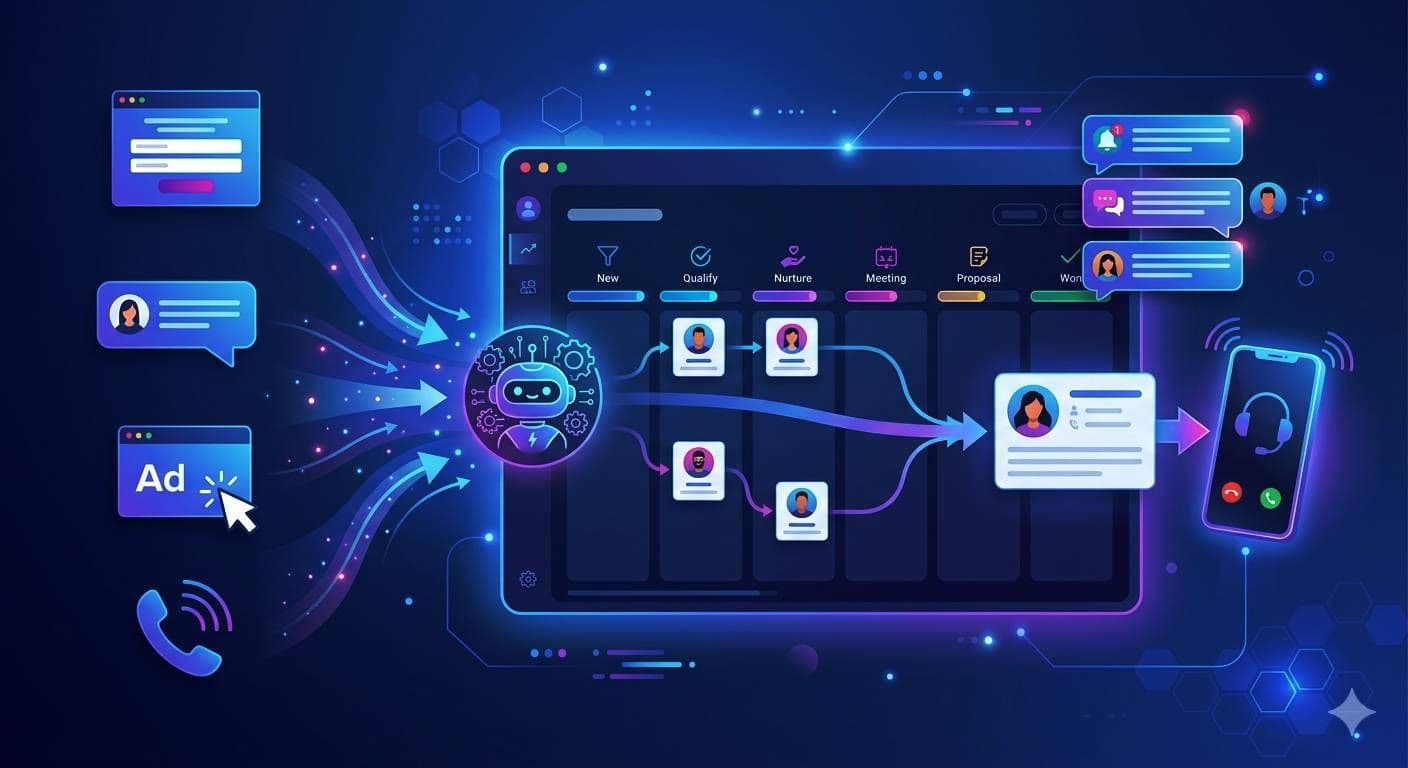
At 4:47 p.m., a prospect fills out a demo form for a regional HVAC company.
They are not casually browsing.
They just had a technician no-show from another vendor, their dispatcher is frustrated, and they want software help now.
The form hits the inbox.
A sales rep sees the notification pop up.
Then reality steps in.
He is already on a call.
After that, he has to update notes from a previous meeting. Then he gets pulled into a pricing question from another rep. By the time he circles back, it is after 5:30. He decides to handle it first thing tomorrow.
The next morning, the lead is still there.
But the moment is gone.
This is the simplest explanation for Why Manual Lead Follow-Up Is Slow: humans do not respond in neat, immediate, uninterrupted sequences. Work arrives in bursts. Attention gets split. Priorities compete. And inbound leads end up waiting inside those gaps.
Most companies treat this as a discipline problem. It is usually not. It is a design problem.
Manual follow-up depends on human availability, memory, context switching, and timing. Those are exactly the things that break under real operating conditions.
The real problem is not effort. It is human timing.
When companies think about lead follow-up, they often imagine a simple chain of events:
A lead comes in.
A rep gets alerted.
A rep reaches out.
On paper, that sounds fast enough.
In reality, every manual step depends on a person being free at the exact right moment. That is the hidden weakness.
Humans are not sitting in a ready state waiting for inbound demand. They are in calls, meetings, lunch breaks, commute windows, pipeline reviews, CRM cleanup, proposal work, and internal chats. Even highly responsive reps spend much of the day unable to stop instantly and contact a new lead.
That is the core reason manual follow-up slows down.
It is not because sales teams do not care.
It is because manual systems assume human immediacy in environments where immediacy is impossible.
A useful reframing is this:
Manual lead response is not a speed problem. It is an interruption problem.
The lead arrives at the exact moment your team is least able to drop everything.
Why Manual Lead Follow-Up Is Slow in day-to-day sales environments
The phrase sounds obvious, but the mechanism matters.
Why does a five-minute task turn into a two-hour delay?
Because manual follow-up is rarely just one action.
First, a person has to notice the lead.
Then they have to stop what they are doing.
Then they have to gather context.
Then they have to decide how to respond.
Then they have to make the call, send the email, or text the prospect.
Then they have to log the activity or remember to do it later.
Each micro-step depends on attention.
And attention is limited.
This is where many businesses misread the issue. They assume the delay comes from laziness, poor scripts, or a weak process. But in many cases, the real bottleneck is cognitive load.
A rep handling ten active opportunities is constantly switching contexts. When a new inbound lead appears, that rep has to mentally leave one conversation, enter another, understand the source, interpret intent, and decide the next move.
That switch takes time, even before any outreach happens.
And if the rep is interrupted halfway through, the lead falls back into the queue.
Manual follow-up is slow because humans do not process inbound demand continuously. They process it in intervals.
That is fine for administrative work.
It is terrible for lead response.
Human limitations create predictable delay patterns
Manual follow-up delays are not random. They follow human behavior patterns.
Here are the most common ones.
1. Attention is batch-based, not instant
Most reps do not respond to leads the second they arrive. They check notifications when they finish the thing in front of them.
That means follow-up happens in batches.
A rep clears calls, then checks the CRM.
A manager finishes a meeting, then assigns leads.
An SDR gets through email, then starts outbound.
From the company side, that feels reasonable.
From the lead side, it feels like silence.
2. Live conversations block new ones
A rep cannot meaningfully call a fresh lead while already on another call.
This sounds obvious, but it is one of the biggest manual constraints. Human sales coverage is not elastic. One person can only have one real-time conversation at a time.
So when lead volume spikes, response speed collapses.
3. Memory is a weak operating system
Manual follow-up often relies on phrases like "I saw that come in" or "I was going to call them after this meeting."
That is not a process. That is memory.
And memory fails under pressure.
Leads do not always get ignored intentionally. They get displaced by whatever feels most urgent in the moment.
4. Energy drops affect responsiveness
People are not equally sharp all day.
A form submission at 10:15 a.m. and one at 4:58 p.m. do not receive the same operating environment. End-of-day fatigue, meeting overflow, and decision fatigue all make manual follow-up slower.
This is another reason human-led speed is inconsistent even with good reps.
What this costs the business
The damage from manual delay is bigger than one missed call.
It affects contact rates, booking rates, pipeline flow, and marketing efficiency.
Start with contactability.
Inbound leads are easiest to reach when their intent is fresh. If a person just requested a quote, pricing, or demo, they are mentally available for that conversation right now. Hours later, they are back in work, commuting, in another meeting, or focused on something else.
This is why teams that improve response speed usually see stronger connection rates and better conversion performance. If you want context on the numbers, FusionSync has written about how response time impacts conversion rates.
Manual delay also distorts marketing ROI.
Companies often look at campaign performance and assume lead quality is the issue. But many so-called low-quality leads were simply contacted after their decision window had passed. The business pays to generate intent, then asks humans to retrieve it later.
That is an expensive mismatch.
There is also a pipeline effect.
When follow-up depends on rep availability, lead handling becomes uneven. Monday morning leads get attention. Friday afternoon leads wait. Busy reps respond slower than open reps. Some leads get great experiences. Others disappear into administrative lag.
The result is not just fewer conversations.
It is a less predictable revenue engine.
The uncomfortable truth: manual systems punish success
Here is the contrarian insight:
The better your marketing works, the worse manual follow-up performs.
Why?
Because more inbound volume increases the exact human strain that causes delay.
More forms mean more notifications.
More notifications mean more interruptions.
More interruptions mean more batching, more deferral, and more forgotten follow-ups.
A team might handle ten leads a day manually.
At thirty leads, cracks appear.
At sixty, the system becomes selective by accident.
Not because leadership chose to ignore leads.
Because humans started triaging without saying so.
That is one reason companies wonder why they miss inbound leads even when they have enough demand. The issue is often not volume alone. It is volume colliding with human bandwidth.
Why buyers feel the delay more than teams do
Internally, a one-hour response can feel fast.
Externally, it often feels disconnected.
That gap exists because teams measure delay against their workload. Buyers measure it against their moment of intent.
A rep thinks, "I got back to them before lunch."
The prospect feels, "I reached out and heard nothing when I was ready to talk."
That difference matters.
Speed creates emotional continuity. Delay breaks it.
This is a big part of why inbound leads go cold. Not because every lead vanishes instantly, but because the buying moment is brief and manual systems are built around human convenience, not buyer timing.
Practical ways to reduce human-caused delay
If the problem is human limitation, the fix is not asking humans to behave like software.
The fix is removing the moments where timing depends on them.
1. Eliminate wait time before first contact
The first response should not require a rep to become available.
At minimum, the system should acknowledge the lead instantly and trigger the next action automatically. That could mean a text confirmation, an immediate call attempt, or a booking prompt.
The key is simple: do not make first contact depend on someone checking a dashboard.
2. Reduce context switching for reps
Reps are fastest when they enter conversations with the basics already captured.
Instead of asking reps to open the CRM, inspect the source, review the form, and decide how to proceed, structure lead intake so qualification details are already gathered and summarized.
This shortens the mental jump between tasks.
3. Design for off-hours and busy windows
Human-led follow-up always degrades during lunch, evenings, weekends, and meeting-heavy blocks.
So the process should assume those gaps exist.
If your workflow only works when reps are free, it does not really work.
4. Stop relying on reminders as a primary system
Tasks, Slack nudges, inbox alerts, and CRM notifications help, but they do not solve the core issue. They still depend on a human noticing, prioritizing, and acting.
Notifications support manual work.
They do not remove manual delay.
How automation solves this exact problem
Automation matters here for one reason above all others: it removes the need for a human to be available at the instant a lead arrives.
That is the entire game.
An automated response system can contact the lead immediately, ask a few qualifying questions, route the conversation correctly, and offer a booking option without waiting for a rep to finish whatever they are doing.
This is especially powerful in channels where intent is high and timing is tight, such as demo requests, quote forms, and paid traffic.
AI makes this even stronger.
Instead of only sending an auto-email, AI can carry the first interaction forward. It can call the lead, answer basic questions, gather qualification details, and book an appointment while interest is still active. The rep enters later, after the timing-sensitive step has already been handled.
That is why businesses exploring AI-driven lead response are not just chasing efficiency. They are solving a human timing problem that manual teams cannot fully solve on their own.
This does not replace salespeople.
It protects them from being the bottleneck at the worst possible moment.
Key takeaways
- Manual lead follow-up is slow because humans work in interruptions, not instant sequences.
- The main delay is not lack of effort. It is limited attention, context switching, and availability.
- Every manual follow-up step depends on a person noticing, stopping, deciding, and acting.
- As inbound volume rises, manual systems usually perform worse, not better.
- The first response should not depend on whether a rep is free right now.
- Automation and AI solve the exact weakness manual processes create: waiting for human availability.
FAQ
1. Why is manual lead follow-up usually inconsistent?
Because it depends on human conditions that change throughout the day. Reps get pulled into calls, meetings, admin work, and active deals. That makes response time uneven even when the team is capable and motivated.
2. Can better rep discipline fix manual lead response delays?
It can improve them somewhat, but it cannot remove the core limitation. Even disciplined reps cannot respond instantly while already engaged elsewhere. The issue is structural, not just behavioral.
3. What is the best way to fix the problem behind Why Manual Lead Follow-Up Is Slow?
Remove the need for a human to handle the first step manually. Instant acknowledgment, automated outreach, AI qualification, and immediate booking options help close the gap created by human availability.
Next step
Need a better follow-up system?
FusionSync keeps inbound leads moving with instant first response, qualification, and automated follow-up when the lead does not answer right away.
Where it works
View all use cases