
Lead Response Time for SaaS Companies
Learn how SaaS companies manage lead response speed.
A buyer signs up for your product at 10:14 a.m.
They hit the pricing page twice, invite a teammate, explore one integration, then open the demo request form.
This is not a casual visitor.
This is someone moving from curiosity to evaluation.
They submit the form with a real work email and a note that says, "Need to understand setup for a 20-person team."
Then nothing happens.
No instant text.
No call.
No smart routing.
No booking link.
No qualification flow.
By 11:30, they are still in research mode, but the energy is gone. They are back in Slack, back in meetings, back in the thousand small decisions that fill a workday. The demo request is no longer the priority it was 76 minutes ago.
This is the real challenge behind Lead Response Time for SaaS Companies.
In product-led and demo-driven funnels, interest does not disappear because the prospect stopped needing the product. It fades because the buying moment was never captured while it was active.
That is the key reframing: speed in SaaS is not just about follow-up. It is about intercepting evaluation momentum before it breaks.
Lead Response Time for SaaS Companies is really a funnel timing problem
Most SaaS teams think of response time as a sales operations metric.
It is more than that.
In product-led growth and demo-led funnels, response speed is part of the product experience itself.
A lead who starts a free trial, hits a usage limit, or requests a demo is raising their hand during a narrow evaluation window. They are comparing workflows, testing friction, validating security, checking integrations, and deciding whether your product feels easy to buy.
If your team responds hours later, the issue is not just delay.
The issue is that the buyer has already left the moment in which they were most willing to act.
This is why SaaS funnels are different from many traditional sales environments. A prospect is often self-educating inside the product or on the website before talking to anyone. By the time they ask for a demo, they have already done meaningful work. Their request is often the final step before shortlisting vendors.
When a company misses that window, the lead does not always look lost in the CRM. It just becomes harder to engage, harder to schedule, and harder to move forward.
Why fast response matters more in product-led and demo-driven funnels
In SaaS, inbound intent is often compressed into short bursts.
A prospect may:
- start a trial after seeing an ad
- invite two coworkers
- view enterprise pricing
- click on security documentation
- submit a demo request
All of that can happen in one session.
That session is your best buying signal.
The problem is that many SaaS companies still treat demo requests like ordinary form fills. The lead enters the CRM, waits for assignment, waits for a rep to notice, and waits for a follow-up email that arrives after the prospect has mentally moved on.
In a product-led funnel, delay breaks continuity.
The buyer was actively thinking about your workflow, your setup, your integrations, and your value. If your response comes quickly, the conversation continues naturally. If your response comes late, the buyer has to reload all of that context from scratch.
That is harder than most teams realize.
People do not buy software in a vacuum. They buy while juggling internal questions, stakeholder opinions, and competing tabs. Fast response works because it meets the buyer while your product is still present in their mind.
If you want the broader context for why inbound leads go cold, the core pattern is simple: intent decays fast. In SaaS funnels, that decay is even sharper because evaluation happens in concentrated moments.
The real mechanism: SaaS leads go cold when evaluation momentum breaks
Here is the mechanism that matters.
A product-led or demo-driven lead is not waiting around to be nurtured. They are in motion.
They are trying to answer immediate questions:
- Will this fit our current stack?
- Can my team use it quickly?
- Is onboarding light or painful?
- Do I need sales to unlock anything important?
- Is this worth pushing internally?
When they submit a demo form, they are not asking for generic contact. They are looking for continuity.
They want the next step to happen while their questions are alive.
If that next step does not happen quickly, momentum breaks in three specific ways.
First, internal urgency fades.
A manager who wanted to evaluate your tool before the afternoon meeting now postpones it until next week.
Second, the evaluation context gets fragmented.
The person who submitted the form may need to bring in ops, IT, finance, or another team lead. Delay makes that internal handoff less likely.
Third, the buying path starts to feel heavier.
If getting a response takes too long, buyers assume onboarding, support, and implementation may feel slow too.
That is the hidden cost.
In SaaS, response time is interpreted as a proxy for operational maturity.
A slow first touch does not just hurt contact rates. It quietly changes how the prospect imagines the customer experience.
What this does to pipeline and conversion
The damage usually shows up later than teams expect.
You will still see demo requests come in.
You will still see some meetings booked.
You may even believe the funnel is healthy.
But under the surface, the delay is reducing yield at every stage.
Fewer form submissions turn into actual conversations.
Fewer conversations include full stakeholder context.
Fewer qualified leads book while intent is high.
Fewer evaluations turn into active pipeline.
This is especially expensive for SaaS companies because acquisition costs are already high. Paid search, review sites, outbound support, content, partnerships, and product-led acquisition all cost money. When a high-intent lead reaches the demo stage and then cools off due to delayed response, the waste is not theoretical.
It is pipeline leakage.
And unlike top-of-funnel problems, this kind of leakage is easy to miss. Marketing still generated the lead. The CRM still recorded the inquiry. Sales may still eventually follow up.
The loss happens in timing.
A useful way to think about it is this: in SaaS, form fills do not create pipeline. Preserved momentum creates pipeline.
That is the original insight many teams miss.
Why SaaS buyers are unusually sensitive to response speed
SaaS buyers are trained by modern software experiences.
They expect fast onboarding.
They expect live chat.
They expect immediate confirmations.
They expect calendar links instead of long email chains.
So when they ask to speak with sales, they do not judge your response against old B2B norms. They judge it against the rest of the software they use every day.
That is why a slow reply feels more damaging in SaaS than in some other categories.
It creates a mismatch between the promise of the product and the reality of the buying experience.
This is also where product-led growth complicates things. When users can explore on their own, companies sometimes assume speed matters less because the product is doing the selling.
Often the opposite is true.
The more self-serve your funnel is, the more important fast response becomes at the exact moments a user signals friction, intent, or upgrade potential. If a trial user requests help after hitting a paywall or asks for a demo after inviting teammates, that is not a generic lead. That is a moment of conversion tension.
A related concept appears in FusionSync's piece on AI lead qualification, where faster qualification shortens the gap between intent and action. In SaaS, that gap is where deals often stall.
Practical ways SaaS teams can improve response time in these funnels
If the problem is broken evaluation momentum, the fix is not simply "reply faster".
The fix is to redesign the handoff from digital intent to live conversation.
Here are the most effective moves.
Trigger response by behavior, not just form submission
A demo request should not be treated as an isolated event.
If someone visited pricing, activated a trial, or invited teammates before submitting the form, that context should shape the response immediately.
The first outreach should reflect where they are in the journey, not sound like a generic thank-you email.
Make booking the default next step
In demo-driven funnels, waiting for back-and-forth scheduling kills momentum.
The confirmation flow should move the lead directly toward a call, qualification step, or live conversation while they are still engaged.
Use instant multi-channel acknowledgement
Email alone is often too passive.
A fast text, callback, or immediate qualification message gives the buyer a sense that progress is happening now, not later. This matters most when the buyer is still at their desk actively evaluating tools.
FusionSync covers this in more depth in its article on automating demo booking with AI, especially for high-intent inbound forms.
Route based on fit and availability in real time
In SaaS, the right response is not just fast. It is relevant.
If an enterprise buyer needs security answers, routing them to the next available generalist may still create friction. The lead should go to the right person or system instantly, based on segment, product interest, and urgency.
How automation solves this exact SaaS problem
This is where automation becomes more than a convenience.
In product-led and demo-driven funnels, automation protects momentum.
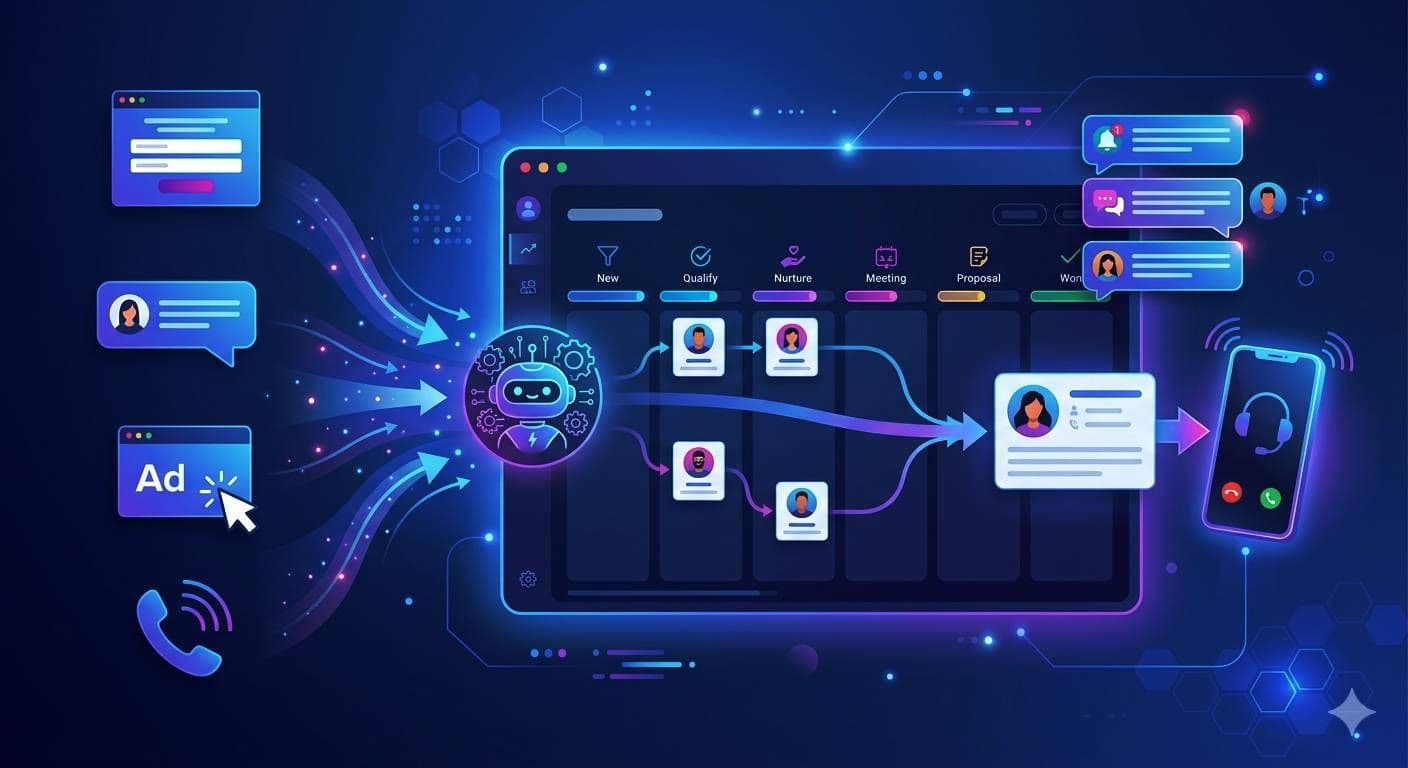
An AI-powered response system can engage the lead the second they submit a demo request or hit a key intent threshold.
It can:
- respond within seconds
- ask qualifying questions
- capture urgency and team size
- offer an immediate callback
- book a meeting automatically
- trigger follow-ups if the lead does not reply
That matters because the system is not waiting for a rep to become available. It is preserving the buyer's active evaluation state.
This is especially valuable after hours, during meetings, across time zones, or when inbound volume spikes after campaigns. A human team can be excellent and still miss the moment. Automation fills the gap between buyer readiness and rep availability.
The best use of AI here is not replacing sales.
It is making sure sales enters the conversation while the opportunity is still alive.
That is why articles like Instant Lead Response Software Explained matter for SaaS leaders. The goal is not faster admin. The goal is to keep high-intent evaluation from cooling between click and conversation.
Key takeaways
- In SaaS, demo requests and product signals happen inside short evaluation windows.
- The main problem is not generic delay. It is broken momentum in product-led and demo-driven funnels.
- A slow first response forces the buyer to rebuild context later, which lowers engagement.
- Response time shapes how prospects perceive your product, onboarding, and operational maturity.
- The most effective fix is an instant, relevant next step tied to live intent.
- Automation works best when it protects the buyer's active decision moment, not just when it sends an auto-reply.
Conclusion
Lead Response Time for SaaS Companies is not just a sales KPI.
It is a conversion lever inside the funnel itself.
When a buyer requests a demo or raises their hand during product exploration, the opportunity is not simply to respond. It is to continue the evaluation while attention is still focused, questions are still fresh, and urgency still exists.
That is why the best SaaS teams treat fast response as part of the buying experience.
Because in product-led and demo-driven funnels, leads rarely go cold all at once. They lose momentum one delayed minute at a time.
FAQ
1. What is a good lead response time for SaaS companies?
For high-intent actions like demo requests, trial hand-raise events, and pricing inquiries, the goal should be immediate response or as close to real time as possible. In SaaS, even short delays can break evaluation momentum.
2. Why are demo requests more time-sensitive in SaaS?
Because demo requests usually happen after a buyer has already explored the product, compared options, and developed specific questions. The request often signals peak evaluation intent, not early-stage curiosity.
3. How can SaaS companies improve lead response time without hiring more reps?
The fastest path is automation. Instant acknowledgement, AI qualification, automatic routing, and immediate booking flows help SaaS teams respond at the moment intent appears, even when reps are busy or offline.
Next step
Want to fix slow lead response?
See how FusionSync responds in seconds, qualifies inbound leads, and moves them toward a booked next step automatically.
Where it works
View all use cases