
The Speed-to-Lead Advantage in Modern Sales
Learn why speed-to-lead has become a major competitive advantage in sales.
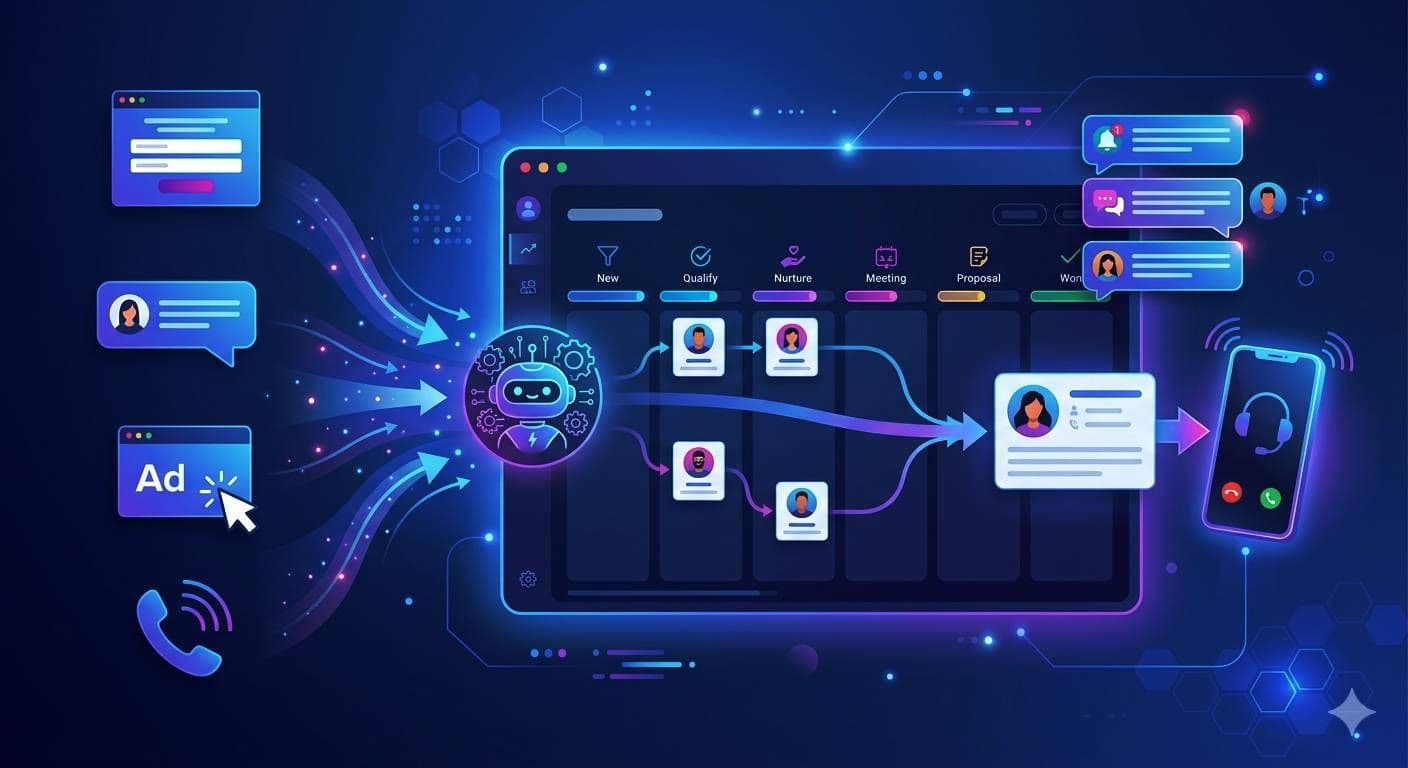
A homeowner in Phoenix clicks a Google ad for a premium HVAC installer at 9:12 p.m.
Their AC is still running, but barely. Summer is coming. They fill out a quote form, answer three questions about square footage, and hit submit.
Three local companies receive the same type of inquiry that night:
- Company A: Sends a generic "we'll get back to you tomorrow" email.
- Company B: Does nothing until the next morning.
- Company C: Texts the homeowner within 20 seconds, places an immediate callback, confirms the home's size, answers a financing question, and offers two appointment slots for the next day.
By 9:16 p.m., Company C is no longer competing for a lead. It is managing an active buying conversation.
That is The Speed-to-Lead Advantage in Modern Sales.
In crowded markets, speed is not just about operational efficiency. It changes market position. The business that responds first does not merely look more organized, it becomes the easiest company to buy from at the exact moment the buyer is ready.
Here is the sharper truth: leads do not quietly "cool off" on their own. In competitive markets, they get organized around the first useful response.
The real problem is not delay. It is lost positioning.
Most companies think of response time as an internal sales metric.
It is more than that. In a crowded category, response speed determines who gets the buyer's attention first, who frames the next step, and who becomes the reference point for every other vendor being considered.
Fast response creates a strong edge. The first company to engage often sets the agenda:
- What problem gets prioritized
- What timeline feels realistic
- What budget range sounds normal
- What next step feels easy
Once that framing happens, every slower competitor is reacting from behind.
This is also the clearest explanation for why inbound leads go cold. Often, leads do not lose interest, they gain momentum with someone else.
Why crowded markets amplify response speed
Speed matters in every industry, but crowded markets make it critical because buyers have more substitutes and less patience.
Think about categories like legal services, home services, SaaS, insurance, med spas, or B2B agencies. Buyers rarely evaluate one option in isolation, they compare pages, forms, reviews, pricing signals, and availability simultaneously.
Your website form is the start of a race for mental ownership.
When multiple vendors seem credible, the buyer looks for the fastest reduction in uncertainty. They want answers to questions like:
- Did someone receive my request?
- Can they help with my exact situation?
- How soon can I talk to a real person?
- What happens next?
The business that resolves uncertainty first gains a powerful advantage, not because its service is proven better yet, but because it reduces friction faster.
Speed is positional. It moves you from being one option in the market to being the active conversation the buyer is already in.
The Speed-to-Lead Advantage in Modern Sales is really an access advantage
Speed-to-lead is more than being first in line. It is about gaining first access to buyer intent while intent is still specific.
Right after a form fill, the buyer remembers:
- What triggered the inquiry
- Which product or service they wanted
- What urgency they feel
- What objections they already have
An hour later, that clarity blurs. The first conversation captures context; a delayed conversation tries to recover it.
Fast responders get cleaner qualification, better call connection rates, and a higher chance of booking the next step in one motion.
For more on removing handoff delays, see automatic lead assignment for sales teams.
What the faster company actually wins
In crowded markets, the faster company does not only win the first reply. It often gains four deeper advantages:
1. Attention before comparison becomes exhausting
The first vendor that responds with clarity and direction often becomes the one the buyer continues with because progress feels easier.
Not every deal is won by persuasion, many are won by reduced cognitive load.
2. Trust by matching buyer urgency
Fast response signals competence. Buyers feel aligned when contacted immediately. Late responses create a subtle mismatch, even if your team is excellent.
3. The next commitment
The biggest conversion jump is often from first touch to second step:
- Booked consultation
- Scheduled estimate
- Product demo
- Qualification call
Fast responders secure that micro-commitment before the buyer drifts into passive comparison.
4. Wins against ad waste
In paid acquisition, speed determines whether expensive clicks become opportunities.
Delayed response weakens ROI on Google Ads, Meta lead forms, or high-converting landing pages. Learn more about Google Ads lead response.
Why human teams struggle to create this edge consistently
The challenge is not awareness, it’s consistency at key moments.
Crowded markets produce leads at inconvenient times:
- After business hours
- During lunch breaks
- While reps are on calls
- During traffic spikes from campaigns
- On weekends
Even strong sales teams default to queue-based behavior: leads wait for assignment, review, then outreach. The market often moves faster than the workflow.
The fix is not better reps or tighter scripts, it is a system that engages buyers at market speed.
The business impact of losing the speed battle
Slow response compounds damage:
- Conversion rates soften, not due to poor lead quality, but because high-intent buyers are intercepted elsewhere.
- Sales teams believe the market is worse than it is.
- Marketing performance appears weaker, campaigns blamed for low ROI.
- Pipeline quality is distorted, slow companies lose the cleanest buyers first.
Speed-to-lead is not marginal, it changes the quality of pipeline reaching sales. Learn more about lead response impact on conversion.
How to create a competitive edge through faster response
1. Respond in the same moment the buyer acts
Begin the buying interaction immediately:
- SMS acknowledgement
- Instant callback
- Short qualification sequence
- Direct path to scheduling
Convert inquiry momentum into live engagement before the buyer opens three more tabs.
2. Reduce the gap between response and next step
Fast replies must also make the next action obvious and immediate.
3. Qualify while intent is fresh
Ask critical questions right away and route the lead efficiently. This shortens the path to meaningful sales conversations.
4. Design for nights and weekends
High-intent leads often submit forms outside staffed hours. If your model only works during business hours, you yield market share during prime buying windows.
How automation and AI solve this exact problem
Automation becomes a competitive defense system:
- Immediate text
- Callback within seconds
- Ask qualification questions
- Capture urgency and intent
- Routing based on answers
- Automatic appointment booking
- Structured follow-up if no answer
AI ensures the company never misses the first positioning moment, even when humans are unavailable.
Key takeaways
- In crowded markets, speed wins attention before comparison sets in.
- Fast response is positional, not just operational.
- The first interaction sets tone, timeline, and next step for the buyer.
- Slow follow-up gives competitors time to organize the buyer.
- Automation and AI engage buyers at market speed, especially after hours or during spikes.
Core lesson: The Speed-to-Lead Advantage comes from owning the first meaningful moment, the difference between being considered and being forgotten.
FAQ
Why does speed-to-lead matter more in crowded markets?
Because buyers have more choices and compare vendors quickly. First responders reduce uncertainty and become easier to engage.
Is a fast autoresponder enough to create an advantage?
No. Generic confirmations help, but real advantage comes from starting a real interaction quickly: answering questions, qualifying, or booking the next step immediately.
How can small sales teams compete on speed without hiring more reps?
Automation covers the first response layer. Instant SMS, AI callbacks, automated qualification, and scheduling let small teams respond like larger organizations without depending on constant manual availability.
Next step
Want to fix slow lead response?
See how FusionSync responds in seconds, qualifies inbound leads, and moves them toward a booked next step automatically.
Where it works
View all use cases