
The Role of Automation in Lead Response Time
Learn how automation improves response speed.
A private equity firm downloads a pricing guide from a B2B software company at 9:12 a.m.
The form submission hits the CRM instantly.
The lead is real.
The buying intent is real.
The budget is probably real too.
But nothing happens.
The SDR who owns that territory is in a discovery call.
The marketing ops manager set up the form correctly, but the alert goes to a shared inbox.
The sales manager plans to review new leads at noon.
Someone eventually notices the submission, checks the account size, confirms ownership, and drafts an email.
At 1:47 p.m., the first response goes out.
From the company’s point of view, the process worked.
The lead was captured.
The CRM recorded it.
A rep followed up.
From the buyer’s point of view, the company felt unavailable.
That is the real story behind a lot of missed pipeline. Not bad demand generation. Not weak sales talent. Not a lack of interest.
It is workflow delay.
And that is exactly why The Role of Automation in Lead Response Time matters so much. Automation is not just a productivity upgrade. It is what removes the invisible pauses between lead capture and first contact.
A useful way to think about it is this:
Leads are rarely lost in the CRM. They are lost in the gaps between steps.
The real problem is not lead capture. It is lead handling.
Most companies assume speed problems start when reps are slow.
In reality, the slowdown usually starts before a rep even sees the lead.
A form submission triggers a chain of small operational steps:
- the lead enters the system
- a notification gets sent
- ownership gets determined
- context gets reviewed
- outreach gets queued
- follow-up depends on rep availability
Each individual step sounds minor.
Together, they create lag.
This is why businesses can have a modern CRM, a capable sales team, and solid lead flow, yet still respond far too late. The bottleneck is not one dramatic failure. It is a collection of tiny manual handoffs.
That is also why articles about response speed often miss the point. They treat slow follow-up like a motivation issue. Usually it is a systems issue.
If the path from form fill to first outreach includes human waiting time at multiple stages, response speed becomes inconsistent by design.
The Role of Automation in Lead Response Time is bottleneck removal
When people hear “automation,” they often think of email sequences or CRM cleanup.
That undersells it.
The true The Role of Automation in Lead Response Time is bottleneck removal.
Automation compresses the time between events.
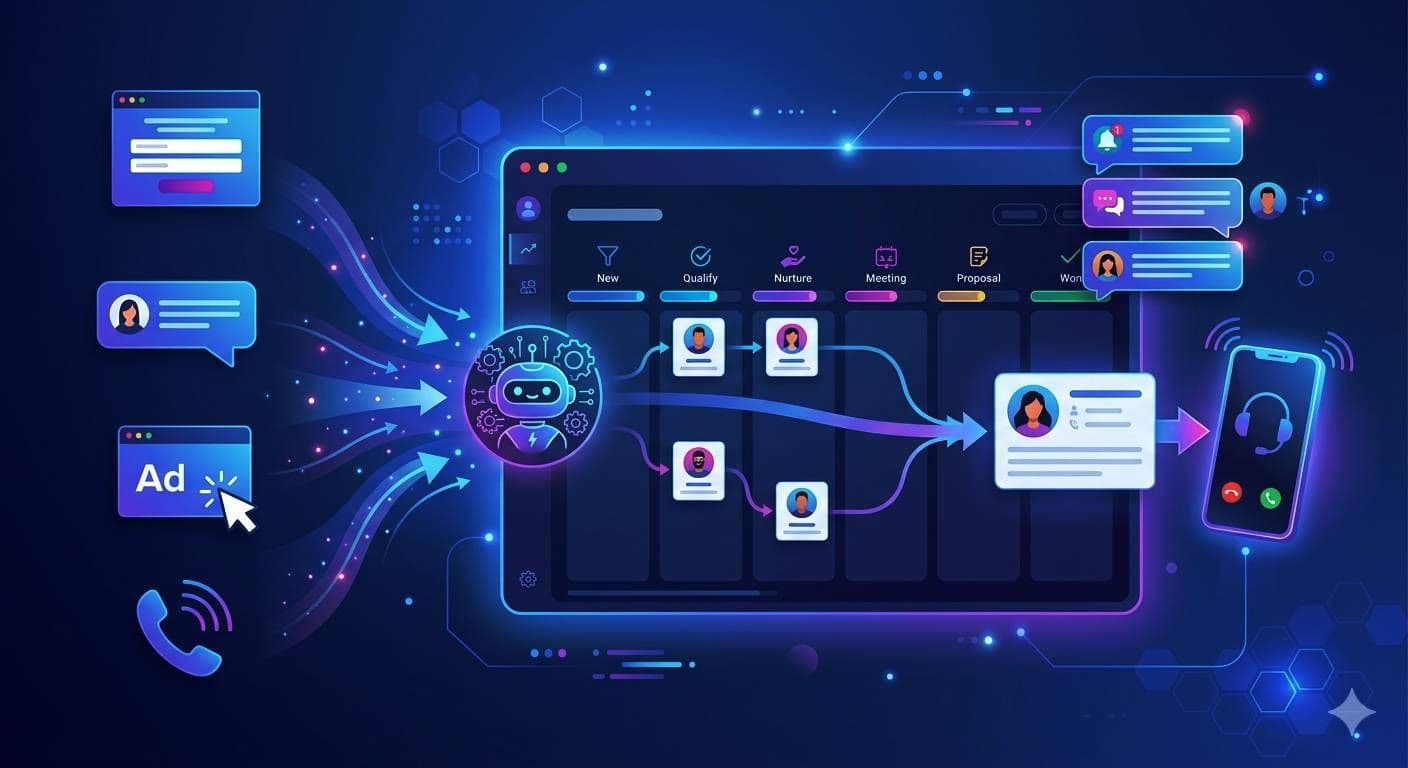
A lead submits a form, and instead of entering a queue, the lead enters an action path.
That action path can include:
- instant acknowledgment by SMS or email
- automatic lead enrichment
- immediate routing to the right owner
- an outbound call triggered within seconds
- qualification questions handled automatically
- calendar booking without waiting for a rep
- follow-up sequences launched if no answer happens on the first attempt
The key is not that automation “helps the team move faster.”
The key is that automation removes the parts of the workflow where nothing happens.
That is an important distinction.
Manual teams do not usually fail because they are careless.
They fail because human attention is batch-based. People check notifications when they can. People prioritize active conversations over new alerts. People move between meetings, tasks, and channels.
Automation is event-based.
It responds when the lead acts.
That difference is everything.
Why manual lead response creates delay even in good sales teams
Let’s use a realistic example.
Imagine a home services company running Google Ads for high-intent repair requests. A prospect submits a request at 7:18 p.m. after discovering a problem that needs quick attention.
The company is not disorganized.
It has a CRM.
It has a front office team.
It has sales coverage during business hours.
But the actual workflow still creates friction:
- The form sends an email notification.
- The office manager sees it later.
- They check the zip code and service type.
- They decide which rep should call.
- The rep is driving between appointments.
- The callback happens the next morning.
Nothing in that process sounds unreasonable.
But every step depends on a person becoming available.
That is the mechanism.
This is why it is useful to understand why manual lead follow-up is slow. Manual handling is not just slower because humans type more slowly than software. It is slower because humans introduce waiting time between decisions.
And waiting time compounds.
One delay of 12 minutes becomes 35.
A small evening backlog becomes an overnight delay.
A routing question becomes a missed contact window.
In other words, the issue is not effort. It is dependency.
The business impact of response bottlenecks
When response time is delayed by manual workflow, the damage spreads beyond one missed conversation.
First, contact rates drop.
The longer a lead waits, the less likely they are to pick up, reply, or re-engage.
Second, booking rates decline.
A lead who would have accepted a call or scheduled quickly at the moment of inquiry becomes harder to move later.
Third, paid acquisition becomes less efficient.
If marketing generates high-intent leads and operations delays the first touch, ad spend loses value after the click.
Fourth, pipeline quality gets distorted.
Sales leaders may conclude that lead quality is weak when the actual problem is that qualified buyers are entering a slow-handling system.
This is especially important for teams investing heavily in paid channels. If you are buying intent through search or social, your workflow has to match the speed of the click. That is one reason lead response time matters for paid ads so much.
A useful reframing is this:
Response speed is not a sales courtesy. It is infrastructure.
If the infrastructure is slow, revenue leaks before selling even starts.
Why automation changes the timing of the entire funnel
Automation does more than shorten first response.
It changes the tempo of the funnel.
Without automation, inbound lead handling is reactive.
The team catches up to demand.
With automation, inbound handling becomes synchronous.
The system meets demand in the moment it appears.
That changes several things at once:
- the lead gets acknowledged while intent is still high
- the first call can happen while the buyer is still near their phone
- qualification starts before internal backlog builds
- appointment options are offered before attention shifts elsewhere
- every missed first attempt triggers the next step automatically
This is why companies that improve speed often see gains that feel disproportionate to the operational change. They did not just shave minutes off a process. They moved interaction closer to buyer intent.
If you want the bigger strategic context, it helps to look at how automation shapes speed to lead. Fast response is not one isolated KPI. It affects contactability, qualification, and meeting creation all the way down the funnel.
What automation should actually automate
A lot of teams automate the wrong layer.
They automate reminders for reps but leave the initial workflow intact.
That helps a little, but it does not remove the core bottlenecks.
To materially improve response time, automation should cover the moments where manual delay usually appears.
1. Trigger the first response instantly
The moment a lead submits a form, the system should respond.
Not after review. Not after assignment. Immediately.
That first response can be:
- a text confirmation
- an email acknowledgment
- an instant callback
- an AI voice outreach
The format matters less than the timing.
2. Route without human review
If the system still depends on someone checking geography, service line, rep availability, or account type, speed will stay inconsistent.
Routing rules should be predetermined and automatic.
That removes one of the most common invisible delays in lead handling.
3. Qualify in the first interaction
A big source of lag is the belief that qualification must wait for a rep.
In many cases, it should not.
Basic qualification can happen automatically through SMS, chat, form logic, or AI call flows. That means the business learns more about urgency, fit, budget, timeline, or service need without pausing the process.
4. Offer booking before human handoff
Many leads do not need a long first conversation. They need the next step.
If the system can present calendar availability immediately, the lead can convert before a rep has time to manually follow up.
5. Launch follow-up sequences automatically
If the first contact attempt fails, the worst outcome is silence.
The system should immediately queue the next touchpoint across phone, SMS, or email.
This is where many businesses begin to understand why inbound leads go cold. It is not just because the first response was late. It is because the whole workflow stayed dependent on manual availability after the first miss.
How AI-powered automation solves the exact bottleneck
The most effective automation does not stop at notifications.
It acts.
That is where AI-powered lead response changes the game.
Instead of telling a rep a lead came in, the system can contact the lead instantly.
It can place a call, ask a few qualifying questions, capture structured answers, and move the lead toward booking.
For businesses with uneven staffing, after-hours demand, or high lead volume, this matters because AI removes the biggest operational risk: waiting for the right person to become available.
A strong system can:
- respond within seconds, not hours
- call every inbound lead automatically
- handle after-hours submissions without delay
- qualify leads consistently
- book appointments into the right calendar
- trigger follow-up until a connection happens
That does not replace the sales team.
It protects the moment before the sales team engages.
And in many cases, that is the moment that determines whether the opportunity exists at all.
Key takeaways
Automation improves response time because it removes handoffs, queues, and waiting time.
Manual workflows slow down even capable teams because every step depends on human availability.
The real value of automation is not convenience. It is that it converts lead handling from batch-based to event-based.
Teams should automate the highest-friction points first: first response, routing, qualification, booking, and follow-up.
AI is especially useful when speed has to happen outside business hours or at scale.
Most importantly, The Role of Automation in Lead Response Time is not theoretical. It is operational. If your process still waits for people at every stage, your response speed will always be inconsistent.
FAQ
How does automation improve lead response time?
Automation improves lead response time by removing the manual steps between lead submission and first contact. Instead of waiting for a rep to notice, assign, and respond, the system can acknowledge, route, call, qualify, and follow up instantly.
What bottlenecks does automation remove in lead response?
The biggest bottlenecks are notification delays, manual assignment, rep availability gaps, qualification lag, and inconsistent follow-up. Automation removes these by triggering actions the moment a lead enters the system.
Is automation better than manual follow-up for inbound leads?
For speed, yes. Manual follow-up can still be valuable for deeper sales conversations, but automation is better at ensuring every lead gets immediate attention. The strongest approach is usually automation first, human follow-through second.
Next step
Let's Fix Your Lead Response in 30 Minutes
We'll walk through your current lead flow, identify where leads are slowing down or getting missed, and show you exactly what can be automated to increase speed, conversations, and bookings.
Where it works
View all use cases