
Why Lead Response Time Matters for Paid Ads
Learn why paid ad leads require instant response.
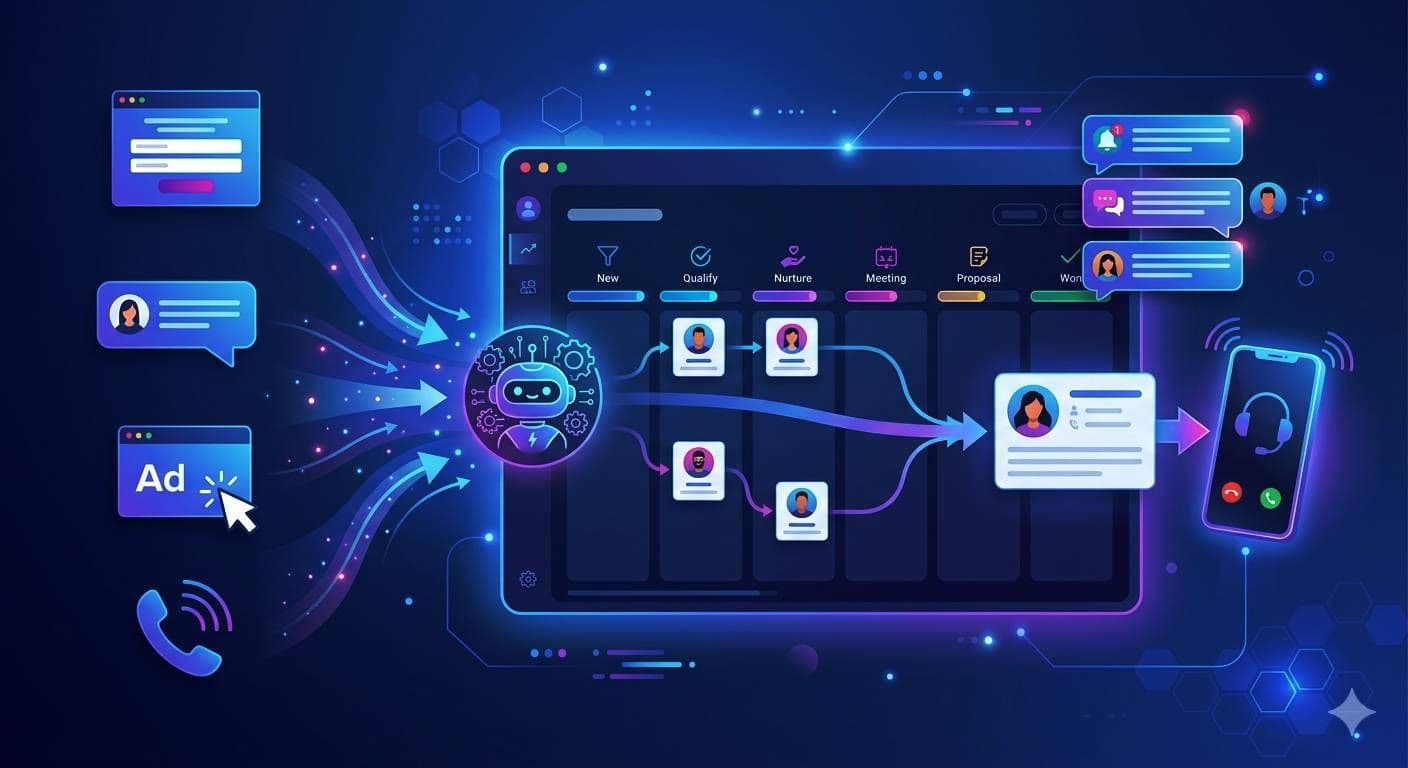
A home services company launches a Google Ads campaign on Monday morning.
By noon, six leads have come in.
Each one cost $78.
The marketing manager is happy because the campaign is working.
The owner is happy because the phones should start ringing.
The sales rep, meanwhile, is out on estimates and plans to call the new leads back later that afternoon.
On paper, nothing looks broken.
But by the end of the week, the company says the same thing a lot of businesses say about paid ads:
"The leads were expensive, and they did not convert well."
That is exactly why lead response time matters for paid ads.
With organic leads, delays are bad. With paid leads, delays are expensive in a very literal way. You did not just miss an opportunity. You paid to create a moment of intent, then let that moment decay before anyone acted on it.
That is the key difference.
Paid leads do not become costly when the invoice from Google or Meta arrives. They become costly when your team waits too long to respond and turns a fresh click into a wasted acquisition.
A useful way to think about it is this:
In paid acquisition, speed is not just a sales metric. It is spend protection.
The real problem with paid ad leads is not volume. It is cost-per-lead decay.
Most companies evaluate paid campaigns through CPL, cost per appointment, and return on ad spend.
That makes sense.
But many teams stop measuring at the moment the form is submitted.
They treat the lead as if the marketing job is done.
It is not.
A paid lead is not a result. It is an asset with a rapidly shrinking shelf life.
If you pay $40, $90, or $250 to generate a lead, the value of that spend depends heavily on what happens in the next few minutes. A slow response does not just lower conversion rates in the abstract. It increases the effective cost of every conversation, every appointment, and every closed deal.
That is the mechanism.
If half your paid leads are contacted too late to engage, your real CPL is no longer the number inside your ad platform. Your real CPL is the number you paid for the few leads that were still responsive when your team finally followed up.
This is where many paid programs quietly break.
The ad campaign looks expensive because the follow-up process makes it expensive.
Why Lead Response Time Matters for Paid Ads
Why Lead Response Time Matters for Paid Ads comes down to one simple fact: every paid click has a price, and delay reduces the return on that price.
When someone clicks an ad, they are in an active buying window. They searched, tapped, compared, and completed a form in one session. That moment was created through paid media.
You bought attention.
You bought intent.
You bought a chance to start a conversation.
But paid intent is highly perishable.
The longer the gap between submission and response, the more your original CPL gets diluted. Not because the ad platform charged you more, but because fewer of those purchased opportunities stay usable.
This is especially painful in categories with rising ad costs:
- legal services
- home services
- real estate
- insurance
- B2B software demos
- medical and elective treatment inquiries
In these markets, every lead already carries economic pressure. If your team takes 30 minutes, 2 hours, or until the next business day to reply, you are effectively paying premium acquisition prices for discount conversion outcomes.
That is a terrible trade.
For teams trying to improve paid performance, it helps to understand how speed to lead impacts marketing ROI. The sales response process is often the hidden variable inside underperforming ad campaigns.
The mechanism: delayed follow-up inflates your actual acquisition cost
Let us make it concrete.
Imagine you buy 100 paid leads at $60 each.
Your ad spend is $6,000.
If your team responds quickly and 40 of those leads turn into real conversations, your cost per conversation is $150.
If your team responds slowly and only 15 of those leads engage, your cost per conversation jumps to $400.
The ad platform did not change.
The landing page did not change.
The keyword targeting did not change.
Your acquisition economics changed because response time filtered out the value of the leads you already paid for.
That is why paid ads punish delay more harshly than most other channels.
With outbound, your main cost is effort.
With organic, your main cost is time and content investment.
With paid ads, your main cost is immediate cash.
So every minute of delay acts like waste on media spend.
This is the reframing most teams miss:
Slow response is not just a conversion problem. It is a paid media leakage problem.
If your paid lead process is slow, your ad budget is not underperforming. It is leaking after the click.
What this looks like in the real world
A SaaS company runs demo ads for a niche workflow product.
Their average cost per lead is $145.
The campaign targets decision-makers, so the marketing team assumes every lead is valuable. They celebrate the steady flow of demo requests.
But the sales team reviews inbound leads in batches three times per day.
A request that comes in at 9:12 a.m. may not get a human response until noon.
From a reporting perspective, it looks manageable.
The lead is in the CRM.
Nothing was technically missed.
Financially, though, the company is creating a much uglier outcome.
At $145 per lead, even a modest delay has a cost. If ten demo requests sit untouched during peak buying hours, that is $1,450 in paid demand waiting for a response. If only a fraction of those people still engage when contacted later, the company is not merely converting poorly.
It is mishandling expensive inventory.
That is the right mental model for paid leads.
Every inbound paid lead is inventory you already purchased.
If response is delayed, that inventory depreciates fast.
Teams working on lead response time for landing page leads often find the same pattern: the page is not always the bottleneck. The handoff after the form is.
Why businesses underestimate this cost
Most companies see CPL clearly.
They do not see response delay cost clearly.
That is because ad platforms make spend visible and follow-up waste invisible.
You can open Google Ads and instantly see:
- spend
- clicks
- conversions
- cost per conversion
But you usually cannot see, at a glance, how many of those paid leads sat for 17 minutes, 54 minutes, or 6 hours before first contact.
So the conversation becomes:
- "Our leads are too expensive"
- "Maybe traffic quality is down"
- "Maybe we need better ad creative"
Sometimes those things are true.
But often the bigger issue is that the business is buying fast intent and processing it with slow operations.
That mismatch makes paid channels feel worse than they really are.
If you want a broader framework for how lead response time impacts conversion rates, the core principle is simple: response speed determines how much of your captured demand remains convertible.
With paid ads, that principle has a direct dollar impact.
The business consequences of slow paid lead response
When response time lags on paid leads, the damage compounds beyond a single missed call.
First, cost per qualified opportunity rises.
You are buying leads at one price, but only a smaller portion become reachable, interested, or bookable. That means the cost of every sales-qualified conversation increases.
Second, cost per appointment rises.
This is where many businesses feel the pain most sharply. They think appointments are expensive because ads are expensive. Often appointments are expensive because too many paid leads were allowed to cool before outreach happened.
Third, close rates appear weaker than they should.
Not necessarily because the leads were low quality, but because the sales process met them after their strongest buying moment had already passed.
Fourth, scaling becomes harder.
If your response workflow wastes paid demand, increasing budget just increases the amount of expensive demand you mishandle. More spend does not fix the system. It amplifies its inefficiency.
That is why some teams double their ad budget and still feel stuck.
They scaled acquisition before fixing response speed.
The smartest fix is to treat response time like a media efficiency lever
Most businesses treat response time as a sales management issue.
For paid leads, it should also be treated as a media efficiency lever.
That changes how you solve it.
Instead of asking, "How do we get reps to call back faster?"
ask, "How do we protect every dollar spent on lead generation the second a form is submitted?"
That leads to better operational decisions:
- immediate lead acknowledgement
- instant routing to the right rep
- automatic SMS follow-up
- instant callback attempts
- qualification before human handoff
- calendar booking in the first interaction window
Notice the pattern.
Each action is designed to preserve the value of paid acquisition, not just improve team discipline.
This is a useful companion to understanding why inbound leads go cold. In paid channels, the answer is especially costly because every cold lead was already purchased.
How automation and AI solve the cost-per-lead urgency problem
This is where automation stops being a nice-to-have and becomes economically rational.
If paid leads are expensive, the business cannot rely on someone noticing an alert, finishing a meeting, opening the CRM, and deciding to follow up.
That process is too fragile for high-CPL channels.
Automation solves the exact issue by compressing the time between spend and response.
A strong system can:
- respond within seconds of form submission
- send a confirmation text immediately
- trigger an instant outbound call
- ask basic qualifying questions
- route the lead based on territory or availability
- offer a live booking link while intent is still high
- continue follow-up automatically if the first attempt is missed
AI adds another layer of protection.
Instead of merely notifying a rep, AI can actively engage the lead right away. It can handle the first touch, collect context, and move the prospect toward a booked meeting while the original ad-driven intent is still fresh.
For paid acquisition, that matters because speed preserves economics.
The faster the response, the more of your purchased demand remains usable.
The more usable demand you keep, the lower your effective cost per opportunity.
That is the real ROI story.
Key takeaways
- Paid leads are different because every lead has a direct acquisition cost.
- Delayed response does not just hurt conversions. It raises your real cost per conversation and per appointment.
- A slow follow-up process can make good ad campaigns look unprofitable.
- The right mental model is not "we need to be faster." It is "we need to protect the value of every paid lead immediately."
- Automation and AI help by reducing the gap between lead submission and first contact to seconds, not hours.
Conclusion
Why Lead Response Time Matters for Paid Ads is ultimately a budget question as much as a sales question.
When a lead costs real money to generate, waiting to respond is not a harmless delay. It is a direct reduction in the value of the spend that created that lead.
That is why the best-performing paid lead systems are built around immediate action.
Not because speed sounds impressive, but because high CPL makes delay financially irrational.
If your paid campaigns feel expensive, the first thing to examine may not be the ads themselves.
It may be how long purchased leads sit untouched after they convert.
In paid acquisition, response speed protects margin.
And the businesses that understand that tend to get more revenue from the same ad budget.
FAQ
1. Why are paid ad leads more sensitive to response time?
Because each lead has a direct cost attached to it. When follow-up is delayed, fewer paid leads turn into conversations, which pushes up the true cost per opportunity and appointment.
2. Can slow response make a paid campaign look worse than it is?
Yes. A campaign can generate strong intent, but if the business responds too slowly, the conversion path weakens after the click. That makes the ad channel appear inefficient when the bigger issue is post-lead handling.
3. What is the best way to improve response time for paid leads?
The most effective approach is immediate, automated engagement. That usually means instant acknowledgement, automatic routing, rapid call or SMS outreach, and AI-assisted qualification or booking before the lead loses momentum.
Next step
Let's Fix Your Lead Response in 30 Minutes
We'll walk through your current lead flow, identify where leads are slowing down or getting missed, and show you exactly what can be automated to increase speed, conversations, and bookings.
Where it works
View all use cases