
How Speed to Lead Impacts Marketing ROI
Discover how response speed affects marketing performance.
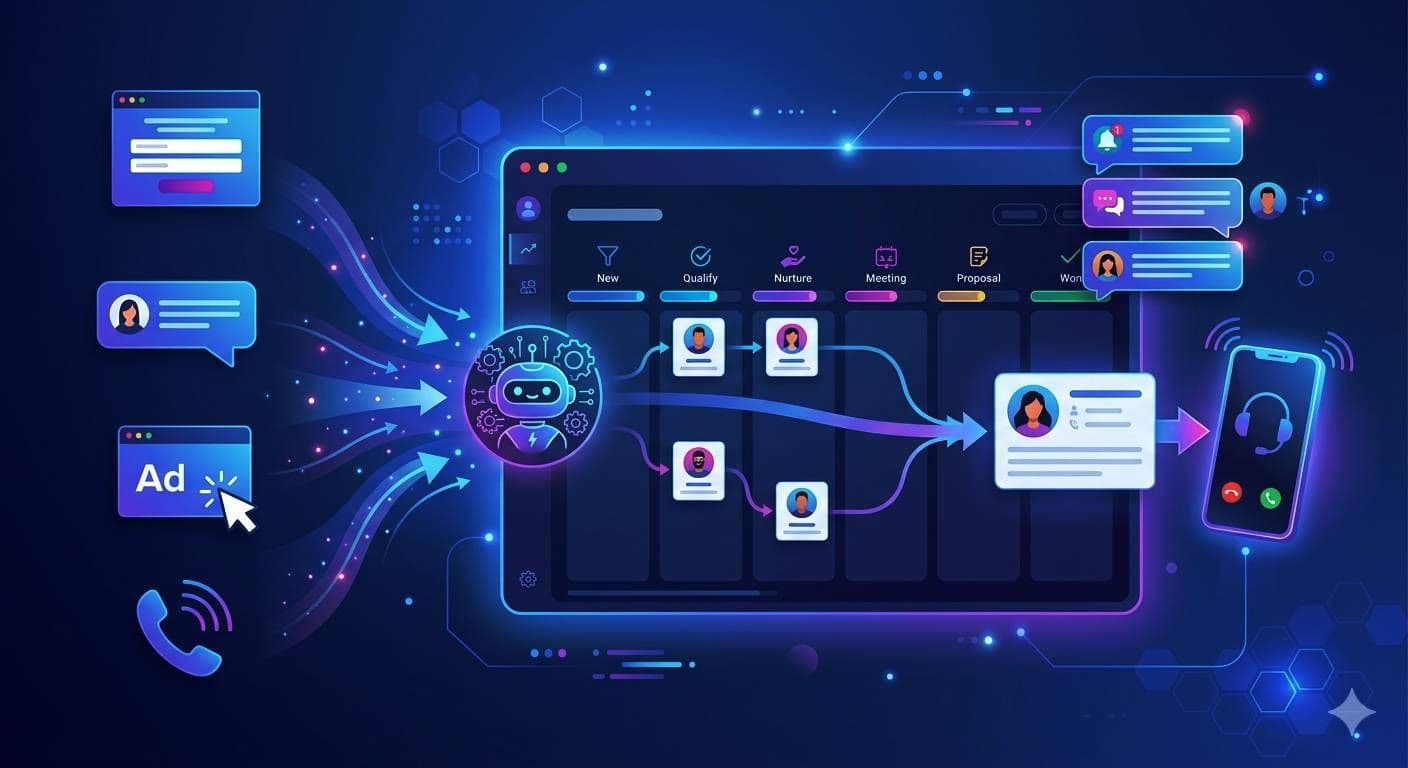
A SaaS company launches a new paid search campaign for “HIPAA-compliant scheduling software.”
The clicks are expensive. The landing page converts well. Demo requests start coming in at a healthy rate.
On paper, marketing is doing its job.
But two weeks later, the revenue picture looks disappointing.
Cost per lead is acceptable. Traffic quality seems strong. Form conversion rate looks fine.
So why is ROI underperforming?
Because the real leak is happening after the form fill.
This is the part many teams miss when evaluating channel performance. They judge Google Ads, organic search, landing pages, and paid social based on lead volume, but the actual return depends on what happens in the first few minutes after submission. That is exactly How Speed to Lead Impacts Marketing ROI.
If response time is slow, marketing does not just lose efficiency. It loses the highest-intent window the campaign paid to create.
Here is the sharp takeaway: marketing ROI is not created at click time. It is captured at contact time.
The real ROI problem is not lead generation, it is lead decay after intent peaks
When someone converts from a paid ad or inbound channel, they are usually acting inside a narrow moment of intent.
They searched a problem.
They compared options.
They landed on your page.
They decided to raise a hand.
That moment is expensive to generate.
Paid channels make this especially obvious. If you spend $80, $150, or even $300 to generate a lead, the value of that lead is highest in the minutes immediately after conversion. The same principle applies to organic inbound leads too. SEO, content, and direct traffic may not create a visible cost per click, but they still represent real acquisition investment.
A slow response acts like a hidden tax on every channel.
Not because the lead disappears for random reasons, but because the buyer’s intent starts depreciating immediately after submission. The longer the delay, the lower the probability that the original acquisition cost turns into pipeline.
This is why teams can have decent traffic metrics and still weak revenue efficiency. They are measuring lead generation success without measuring lead capture speed.
If you want a broader explanation of why inbound leads go cold, the short version is simple: the value of intent collapses faster than most teams operate.
How Speed to Lead Impacts Marketing ROI across paid and inbound channels
The connection between response speed and ROI is direct.
Marketing creates demand. Speed to lead determines how much of that demand becomes conversation, qualification, and booked pipeline.
Here is the mechanism:
- Marketing spends money or effort to create inbound intent
- A prospect submits a form at peak interest
- Response time determines whether that interest becomes engagement
- Engagement determines qualification and meeting rate
- Meeting rate drives pipeline and revenue
- Pipeline and revenue determine channel ROI
That means response time is not just a sales metric. It is a multiplier on marketing performance.
When speed to lead improves, the same campaign can produce more conversations from the same lead volume.
When speed to lead is slow, every channel looks less effective than it really is.
This is especially dangerous in paid media. Marketers may think the campaign needs new creative, new landing pages, or tighter targeting. Sometimes it does. But often the campaign is fine. The follow-up timing is what is crushing return.
In other words, poor response speed can make good marketing look bad.
That is why companies investing in lead response time benchmarks for B2B companies often uncover a painful truth: they do not have a top-of-funnel problem. They have a speed-to-capture problem.
Why response time hits paid leads even harder
All inbound leads lose value over time, but paid leads make the loss more visible and more expensive.
A click from Google Ads or paid social usually comes from active campaign spend. You are buying attention in real time. Once a lead converts, the clock starts on turning that paid attention into a sales conversation.
If that handoff is delayed, the economics deteriorate quickly.
Imagine this simple scenario:
- You pay $100 per lead
- 100 leads come in
- Spend is $10,000
- If 30 leads become qualified opportunities, acquisition economics may work
- If slow response causes only 15 to become qualified opportunities, ROI may collapse
Same traffic. Same offer. Same landing page.
Different response speed.
That is the important point. Speed to lead does not just influence conversion rate in the abstract. It changes the output of every dollar already spent.
Paid lead generation is often managed with intense attention to CPC, CPL, and landing page conversion rate. But if no one responds quickly, those metrics become misleading. You can lower CPL and still destroy ROI if follow-up is too slow.
For paid acquisition teams, speed to lead should be treated like budget protection.
This is why businesses running Google Ads, Meta lead ads, or demo campaigns should also understand why paid leads require faster response. The cost structure leaves less room for delay.
Inbound channels have the same problem, even when the cost is less obvious
Some teams assume response time matters most for paid media and less for SEO, referrals, or direct inbound.
That is a mistake.
The cost is just harder to see.
Organic search leads may come from months of content production, technical SEO work, and brand investment. Demo requests from a high-performing website may be the result of long-term positioning and pipeline-building efforts. Referral leads may come from trust built over years.
Those leads are not free.
They simply arrive without a visible ad charge attached to the moment.
If the business takes hours to reply to an organic demo request, it wastes accumulated marketing effort the same way a delayed paid lead follow-up wastes ad spend.
The ROI loss is still real. It just hides inside blended CAC and lower funnel conversion rates.
This is why strong inbound programs should not only focus on traffic growth. They should also focus on how lead response time impacts conversion rates. More traffic does not fix slow lead capture. It often just scales the waste.
The deeper mechanism: intent has a half-life
The reason response speed affects marketing ROI so strongly is not simply that buyers are impatient.
It is that inbound intent behaves like a decaying asset.
When someone submits a form, their mental context is fully active.
They remember the problem.
They remember your message.
They remember why they reached out.
They are ready to compare, answer questions, and take the next step.
A delay weakens all of that context.
This matters for ROI because marketing’s job is to create that moment of attention and action. If the business fails to engage while the context is still alive, the cost of creating the opportunity remains, but the probability of monetizing it drops.
That is the financial mechanism.
Not every delayed lead is permanently lost. But many delayed leads become harder to contact, harder to qualify, and slower to progress. That means more effort per opportunity and lower return per channel.
So the issue is not just conversion loss.
It is conversion friction.
And conversion friction reduces marketing efficiency even when some leads are eventually recovered.
What slow speed to lead does to your channel economics
When response time is poor, the damage shows up in four places.
1. Cost per qualified opportunity increases
If the same campaign generates the same number of raw leads but fewer become sales conversations, your effective cost per opportunity rises.
Marketing may report stable CPL while finance sees declining efficiency.
2. Pipeline yield from each channel drops
A channel might still produce lead volume, but less of that volume turns into booked meetings and qualified pipeline.
That makes otherwise healthy channels look weaker than they are.
3. Budget decisions become distorted
Teams often cut spend on channels that seem underperforming.
But if the real issue is response speed, they are making channel decisions based on operational failure rather than market demand.
4. CAC rises without obvious explanation
When fewer leads convert downstream, customer acquisition cost goes up. Many organizations respond by trying to optimize campaigns harder, when the simpler fix is improving response time.
This is the hidden reason some companies keep increasing ad spend but never see proportional pipeline growth.
They are buying intent faster than they can act on it.
A pattern many teams miss: marketing and sales measure different moments
Marketing teams often optimize for the moment before submission.
Sales teams manage the moment after.
ROI depends on both, but the handoff between them is where value is usually won or lost.
That is why speed to lead should be treated as a shared revenue metric, not just a sales operations detail.
If marketing brings in 500 leads and the business responds too slowly to half of them, the campaign did not truly generate 500 useful opportunities. It generated 500 chances, only some of which were captured.
This reframing matters.
Speed is not operational. It is financial.
Once teams see it that way, response time stops being a nice-to-have service metric and becomes part of ROI management.
Practical ways to protect ROI with faster lead response
If the goal is better return from paid and inbound channels, the fix is not abstract. It is operationally specific.
Instrument response time by source
Do not measure only overall lead response time.
Measure response time by channel:
- Google Ads
- Meta lead ads
- organic search
- demo request forms
- contact forms
- partner or referral sources
This helps you see where ROI is being lost.
Match speed targets to lead intent
Not every lead source has equal urgency, but high-intent channels need near-immediate follow-up.
Demo requests, pricing requests, and paid form submissions should trigger response in minutes, ideally seconds.
Reduce handoff delay
Every extra step between form submission and first outreach lowers channel efficiency.
Route leads instantly. Remove manual assignment where possible. Trigger acknowledgment and outreach automatically.
Build follow-up around the acquisition moment
The first minutes matter most. A delayed but well-written email sequence does not recover the full value of a missed high-intent window.
Your system should be designed to engage right after conversion, not later when someone gets to it.
How automation protects marketing ROI at the moment it matters most
This is where automation becomes more than convenience.
It becomes revenue infrastructure.
If a lead comes in from a paid ad at 9:14 PM, waiting until the next morning means the business paid to create intent and then chose not to act on it.
An automated response system changes that.
The lead can get an immediate text, email, callback, or AI-led qualification flow. If appropriate, the system can ask initial questions, identify fit, and book a meeting while intent is still fresh.
That is not about replacing sales reps.
It is about preserving the marketing investment until a human seller can take over.
This is why AI-powered response systems are increasingly attractive. They close the timing gap between lead creation and lead engagement. In practical terms, they help companies turn more of their existing traffic and ad spend into conversations without increasing budget.
For businesses trying to improve channel performance, that is often the fastest path to better ROI.
Key takeaways
- Marketing ROI depends on what happens after the form fill, not just before it
- Response time directly affects the value captured from paid and inbound channels
- Slow speed to lead increases cost per opportunity, lowers pipeline yield, and inflates CAC
- Paid leads make the problem easier to see, but organic and referral leads suffer too
- Intent has a half-life, and delayed follow-up reduces the monetization of acquired demand
- Automation and AI help protect ROI by engaging leads while intent is still active
Conclusion
The clearest way to understand How Speed to Lead Impacts Marketing ROI is this: marketing creates the opportunity, but response speed determines how much of that opportunity becomes revenue.
If your paid and inbound channels generate interest but your team responds too slowly, you are not just losing leads. You are reducing the return on every campaign, every landing page, and every content investment behind them.
That is why How Speed to Lead Impacts Marketing ROI should be part of every serious demand generation conversation.
Improve the speed of engagement, and you often improve ROI without touching traffic volume, ad creative, or conversion rates.
Because the fastest way to grow return is often not buying more demand.
It is capturing more of the demand you already paid to generate.
FAQ
1. Why does speed to lead affect marketing ROI so much?
Because ROI depends on converting generated demand into actual sales conversations. If response is delayed, fewer leads engage while intent is still high, which lowers qualification rates and reduces revenue from the same marketing spend.
2. Does speed to lead matter more for paid leads than organic leads?
It is often more visible with paid leads because the acquisition cost is immediate and measurable. But organic leads also represent significant investment through SEO, content, and brand building. Slow response reduces ROI in both cases.
3. What is the best way to improve speed to lead without hiring a larger team?
The most effective approach is usually automation. Instant routing, automated outreach, AI qualification, and immediate booking workflows help businesses respond in seconds or minutes instead of hours, which protects the value of paid and inbound lead generation.
Next step
Want to fix slow lead response?
See how FusionSync responds in seconds, qualifies inbound leads, and moves them toward a booked next step automatically.
Where it works
View all use cases