
Why Paid Leads Require Faster Response
Learn why paid ad leads need immediate follow-up.
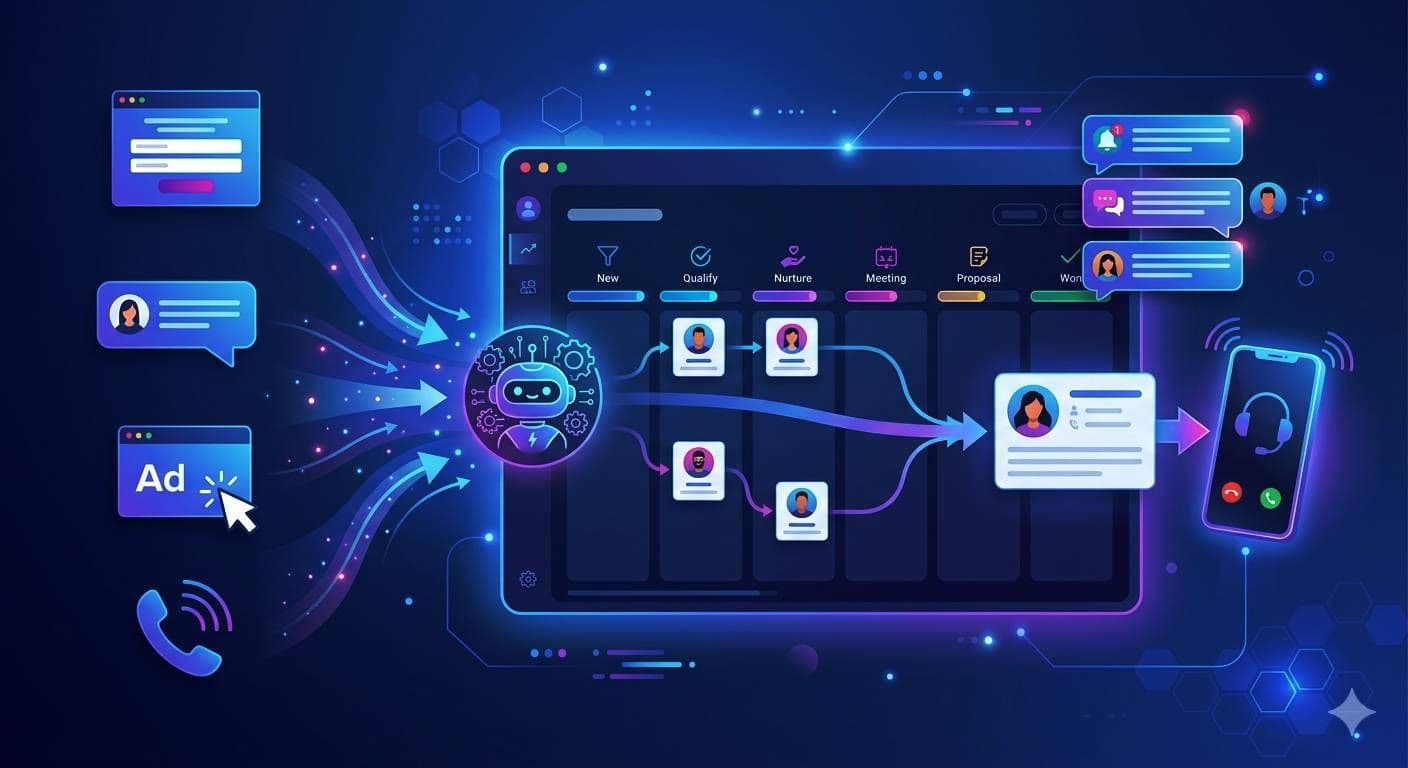
A home services company launches a Google Ads campaign for emergency HVAC installs in July.
The clicks are expensive. The keywords are competitive. Every form fill costs real money.
By noon, three leads come in from landing pages built specifically for high-intent searches like “AC replacement near me” and “same day HVAC quote.” The marketing team is happy because the campaign is producing conversions.
The sales side does what many teams do. They plan to call those leads back later that afternoon.
By then, the economics have already changed.
Not because the leads disappeared for no reason.
Not because the traffic was bad.
Not because the ads failed.
The real issue is simpler and more costly: paid leads arrive with both high acquisition cost and high comparison intent. That combination creates a very short window to turn ad spend into revenue.
That is the core of Why Paid Leads Require Faster Response.
When a lead comes from paid search, paid social, or a high-cost landing page campaign, you are not just handling an inquiry. You are handling an expensive buying moment. If your team responds slowly, the problem is not only lower conversion. It is that you paid premium prices to create urgency, then failed to meet it.
Here is the sharpest way to think about it:
Speed isn’t just operational for paid leads. It is economic defense.
The real problem with paid leads
Most inbound leads are valuable. Paid leads are different because their cost and intent are compressed into the same moment.
A paid lead usually comes from a prospect who was actively searching, clicking, comparing, and evaluating options right now. They did not casually stumble onto your brand. They entered a competitive marketplace, saw multiple alternatives, and chose to submit a form while still in research mode.
That matters because every minute after submission carries two forms of loss.
First, the lead you paid to acquire gets less likely to convert.
Second, the effective cost of every booked appointment goes up.
This is why paid channels are so unforgiving. If a business pays $80, $150, or $300 per lead depending on industry, a delayed first response is not just a sales inefficiency. It is wasted acquisition cost.
In broader terms, this is also part of why inbound leads go cold. But with paid leads, the financial penalty is sharper because every missed opportunity came from budget that was intentionally spent to create demand now.
Why Paid Leads Require Faster Response in competitive markets
The main reason paid leads need immediate follow-up is not generic impatience.
It is competitive intent.
A person who clicks an ad is usually not beginning their search. They are already in motion. They may have searched three vendors, opened five tabs, and submitted two forms in less than ten minutes.
Paid lead channels intensify this behavior because ads appear precisely where comparison shopping happens.
Think about what is happening in the buyer’s head.
They are searching terms with commercial intent.
They are seeing sponsored listings stacked next to one another.
They are landing on pages built to capture action quickly.
They are expecting a rapid reply because the experience itself is immediate.
The lead is not passive. The lead is actively sourcing options.
That is the mechanism.
When you buy attention at the exact moment someone is evaluating providers, you also buy into a race. Not a brand race over months. A contact race over minutes.
This is why paid lead response is different from slower-burn channels like referrals, repeat buyers, or organic educational traffic. Paid leads often enter your funnel at the decision stage, not the awareness stage. Their clock starts faster because their buying behavior is already compressed.
High acquisition cost makes delay more expensive than most teams realize
Many companies evaluate paid lead performance at the campaign level.
Cost per click.
Cost per lead.
Landing page conversion rate.
Those metrics matter, but they often hide the operational leak.
If you pay $120 per lead and your team responds in two hours, you are not really buying leads at $120. You are buying a smaller number of reachable conversations at a much higher effective cost.
For example:
- 100 paid leads at $120 each = $12,000 in spend
- If delayed response causes only 35 of those leads to engage meaningfully
- Your effective cost per real sales conversation is no longer $120
- It becomes closer to $343 before sales effort is even counted
That is the hidden tax of slow follow-up on paid acquisition.
The marketing campaign may look efficient in-platform while the business outcome becomes inefficient in reality.
This is why response speed should be treated as part of paid media economics, not just part of SDR discipline.
A useful companion read here is how speed to lead impacts marketing ROI. It highlights a point many teams miss: response speed changes the return on traffic you already paid for.
Paid lead buyers are actively shopping, not waiting
Here is where many teams misread paid leads.
They assume a form submission creates a queue.
In reality, it creates a live buying session.
That person is still on their phone. Still on their laptop. Still comparing pricing, service area, credibility, and availability. The lead has not moved from “interested” to “waiting patiently.” They are still shopping.
That means delayed outreach does something specific.
It changes your position in the comparison set.
At the moment of form submission, you are relevant.
Twenty minutes later, you may be one of several options.
Two hours later, you may be a backup.
The next day, you may just be noise.
This is especially true in categories where paid leads are expensive because intent is high:
- legal services
- home services
- real estate
- insurance
- B2B software demos
- high-ticket local services
In these markets, leads do not cool down in a vacuum. They keep moving through an active decision path.
That is why the line “competitor responded first” is true but incomplete.
A better framing is this:
Paid leads do not go cold. They get financially reallocated to whoever engages the buying moment first.
The business impact shows up beyond conversion rate
Most people talk about speed only in terms of lead-to-close conversion.
For paid acquisition, the damage spreads wider.
1. Your cost per booked appointment rises
If response delays reduce contact rates, your booked meetings drop while spend stays fixed.
Marketing sees the same lead volume.
Sales sees weaker outcomes.
Finance sees CAC rise.
2. Paid media gets blamed for an operations problem
Teams often conclude that ad quality is slipping when the real issue is that the company is too slow after the click.
That leads to unnecessary campaign changes, wasted testing cycles, and bad channel decisions.
3. Forecasting becomes unstable
When paid lead response is inconsistent, pipeline from paid channels becomes volatile.
Not because demand is unpredictable, but because execution is.
4. Premium intent gets treated like low-priority traffic
This is the biggest mismatch of all.
Companies will spend aggressively to attract high-intent buyers, then process those buyers with the same slow workflow used for general inquiries.
That is like paying extra for express shipping and then leaving the package in the warehouse.
If you want a benchmark mindset, why Google Ads leads require instant response is especially relevant because search leads often represent the clearest form of high-cost, high-intent demand.
Why manual follow-up breaks down with paid lead volume
Paid lead generation creates spikes.
A campaign turns on.
A landing page starts converting.
A retargeting ad performs better than expected.
Suddenly leads arrive in clusters.
That is exactly where manual response systems fail.
Not because the team is careless, but because the workflow was never designed to protect expensive, comparison-driven inquiries in real time.
A manager sees the notification.
A rep is in a call.
Another lead arrives after hours.
A third sits in the CRM until someone checks it.
The problem is not simply that the response is late.
The problem is that paid lead channels produce urgency at machine speed, while manual teams process them at human availability speed.
That mismatch is what destroys value.
This is closely related to why manual lead follow-up is slow. In paid acquisition environments, that slowness gets magnified because every delayed minute has a direct budget consequence.
Practical ways to protect paid lead spend
If paid leads require faster response because of acquisition cost and competitive intent, then the solution is not “try harder.”
The solution is to build a response model that matches the economics of the channel.
Prioritize paid leads differently
Do not treat paid leads as standard inbound.
Tag them by source, campaign, and intent level. A lead from a high-cost search campaign or demo-focused landing page should trigger a higher-priority workflow than a general contact submission.
Design for immediate first contact
The goal is not eventually reaching out. The goal is entering the buying conversation while the buying session is still active.
That means first contact should happen in minutes or seconds, not hours.
Use multiple channels quickly
A fast text confirmation, immediate call attempt, and follow-up email can work together.
Paid leads often respond best when the outreach feels connected to the action they just took.
Measure effective cost, not just lead cost
Track:
- cost per contacted lead
- cost per qualified conversation
- cost per booked appointment by response-time bucket
This reveals whether your ad spend is being protected or diluted.
Align sales SLA with media spend
If you are willing to spend aggressively for high-intent traffic, you need a response standard that reflects that investment.
Otherwise marketing is buying moments sales is not equipped to catch.
How automation and AI solve this exact paid lead problem
This is where automation stops being a convenience and becomes infrastructure.
For paid leads, the win is not simply speed for its own sake. It is preserving the value of expensive intent the moment it appears.
An AI-powered instant response system can:
- respond the second a form is submitted
- call the lead immediately while intent is still active
- ask qualifying questions
- route based on campaign, service, or territory
- book an appointment automatically
- trigger persistent follow-up if the first attempt is missed
That matters because paid leads do not wait for rep availability.
Automation closes the timing gap between ad click and sales action.
It lets the business behave in a way that matches how the lead was acquired.
For FusionSync’s category, this is the real strategic value of AI in lead response. It protects ad spend from operational delay. It turns expensive inbound traffic into immediate engagement instead of a CRM backlog.
In other words, AI is not just helping teams move faster.
It is helping them stop paying premium prices for opportunities they answer too late.
Key takeaways
- Paid leads require faster response because they combine high acquisition cost with active comparison shopping.
- Delay does not just reduce conversion. It raises the effective cost of every real conversation and booked appointment.
- Paid lead follow-up should be treated as part of marketing ROI, not as a separate sales admin task.
- The core issue is channel economics: you paid to create intent now, so you need to engage it now.
- Automation and AI are the most reliable way to protect expensive lead sources at the speed those sources demand.
Conclusion
The clearest answer to Why Paid Leads Require Faster Response is that paid acquisition buys access to high-intent buyers at the exact moment they are comparing options, and that access is expensive.
When your team responds slowly, you do not just lose a lead. You weaken the return on every dollar spent to generate that lead in the first place.
That is why paid lead speed should be treated as a revenue protection strategy.
If a business is investing heavily in ads, landing pages, and high-intent campaigns, then instant response is not a nice-to-have. It is the mechanism that protects acquisition cost and captures competitive intent before the moment passes.
FAQ
1. Why are paid leads more time-sensitive than other inbound leads?
Because paid leads usually come from buyers with immediate commercial intent. They are actively searching, comparing, and submitting forms in a compressed decision window. That makes response speed critical.
2. How does slow response affect paid lead ROI?
It increases the effective cost of each qualified conversation and booked meeting. Even if cost per lead looks healthy, delayed follow-up can make the actual cost per opportunity much higher.
3. What is the best way to respond to paid leads faster?
The most effective approach is an automated, instant-response workflow that can contact, qualify, and route leads immediately across phone, SMS, or email. That helps protect both ad spend and conversion opportunity.
Next step
Need a better follow-up system?
FusionSync keeps inbound leads moving with instant first response, qualification, and automated follow-up when the lead does not answer right away.
Where it works
View all use cases