
Multi-Channel Lead Response Strategies
Learn how multi-channel outreach improves response rates.
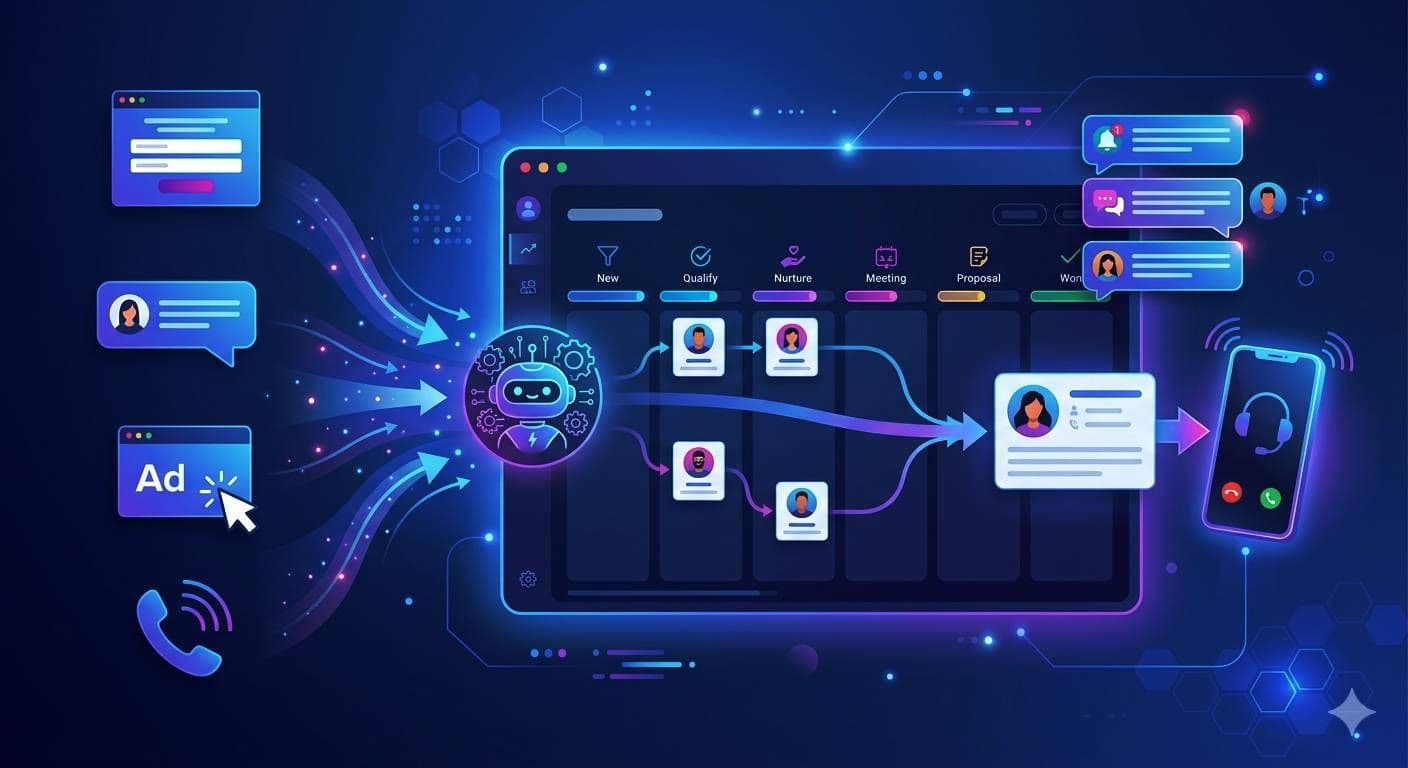
A roofing company in Phoenix was paying heavily for storm-season Google Ads.
The clicks were expensive, but the form volume looked great. Homeowners were requesting inspections from their phones, often while standing in the driveway looking at visible damage.
The company did what many teams do. It sent an email confirmation, created a CRM record, and waited for a rep to call when someone was free.
On paper, that looked like a response process.
In reality, it was a delay process.
Many of those leads never answered the later call. Not because they were bad leads. Not because the ad traffic was poor. And not even because the sales team was lazy.
The real issue was channel mismatch.
The business responded in one channel while the buyer was moving across three.
That is why Multi-Channel Lead Response Strategies matter. They do more than add extra touchpoints. They shrink the time between intent and conversation by reaching the lead through the fastest available path, not the company’s default path.
Here is the key reframing: slow response is often not a people problem. It is a channel design problem.
The problem is not just delay. It is single-channel delay.
When an inbound lead comes in, most teams still rely on one first-response motion.
Usually that means one of three things:
- an email autoresponder
- a manual phone call later
- a task assigned to sales
The problem is that buyers do not sit inside one channel waiting politely.
They submit a form on mobile, switch to text, ignore unknown calls, skim email later, and may be ready to talk only for a tiny window. If your first response depends on one route, your effective response time becomes longer than your logged response time.
That distinction matters.
A CRM may say the lead was contacted in two minutes because an email was sent instantly. But if the lead never saw that email and your first real interaction happened 47 minutes later by phone, then your true response time was 47 minutes.
This is one of the clearest explanations for why inbound leads go cold. They are not always ignored. Often, they are responded to in the wrong sequence of channels.
Why Multi-Channel Lead Response Strategies reduce hidden response delay
Multi-Channel Lead Response Strategies work because they reduce dependency on a single contact path.
That sounds simple, but the mechanism is important.
Every channel has friction:
- Email can be delayed by inbox overload
- Phone calls can be missed or screened
- SMS can be seen quickly but works best when timed correctly
- Voicemail may create awareness but not immediate conversation
When a business uses only one of those channels first, it accepts all the friction of that channel upfront.
When a business combines channels intelligently, it compresses the delay caused by channel failure.
For example:
- an instant SMS confirms the request was received
- an automated call follows while intent is still high
- an email delivers details and credibility
- a timed follow-up message creates a second chance if the call is missed
Now the lead does not have to discover your response in one exact place. Your system meets them where they are most reachable.
That is the core advantage.
Multi-channel is not about being louder. It is about reducing the waiting time created when any single channel fails.
Why this issue happens in real sales environments
Most response systems are built around internal convenience, not buyer behavior.
A sales team asks, “What is the easiest first step for us?”
So they send an automated email.
Or they create a callback queue.
Or they assign leads to reps and trust each person to decide the next action.
But buyers experience none of that workflow. They only experience whether the company feels available.
This is where hidden delay gets introduced.
A form submission may hit the CRM instantly, but if the company waits for the rep to choose the channel, write the message, and make the call, each small decision adds time. Even worse, the rep often chooses only one outreach method first.
That means the lead is not just waiting for a response. The lead is waiting for a sequence of guesses.
First guess: call.
No answer.
Second guess 20 minutes later: email.
No reply.
Third guess the next morning: text.
By then, the original intent window is gone.
This is why combining channels is so effective. It removes serial guessing and replaces it with coordinated outreach.
If you want to improve contact speed further, it helps to understand the mechanics of email vs phone vs SMS for lead response. The strongest systems do not treat those channels as separate tactics. They treat them as one response layer.
The business cost of using only one response channel
Single-channel follow-up creates a quiet revenue leak.
Not a dramatic failure. A quiet one.
Leads still enter the funnel. Some still answer. Dashboards still show activity.
But contact rates underperform because too many leads are only reachable in a different channel than the one used first.
That creates four problems.
1. More leads age before the first real interaction
The clock does not stop after form submission.
If your first channel misses, the time required to switch to another channel becomes dead space. That dead space is where intent fades.
2. Sales reps spend time chasing instead of connecting
Manual rep behavior in single-channel systems often looks like this:
- call once
- leave voicemail
- set reminder
- send email later
- try again tomorrow
That is not a response system. It is a recovery system.
3. Paid lead economics get worse
If you are buying traffic from Google Ads, Facebook lead forms, or landing pages, delayed connection means you are paying premium acquisition costs for leads you fail to engage at peak intent.
4. Pipeline quality looks worse than it really is
This is the contrarian point: many teams think they have a lead quality problem when they actually have a channel orchestration problem.
The lead was fine.
The response path was weak.
Buyer behavior makes channel combination more important than ever
Modern buyers rarely behave in a straight line.
They may submit a form during a meeting, glance at a text between appointments, ignore unknown numbers, and open email later that night.
That means channel responsiveness changes minute by minute.
A good response process should assume this variability instead of fighting it.
This is why fast teams increasingly use immediate text plus instant call attempts plus structured email confirmation. Not because every lead wants all three, but because the business does not know which channel will break through first.
The first successful interaction matters more than the first attempted interaction.
That is an important metric distinction.
If your team only tracks “time to first touch,” you may miss the actual problem. A better lens is time to first engagement.
That is also why companies investing in how SMS improves lead response speed often see gains quickly. SMS does not replace other channels. It shortens the gap until one of them creates engagement.
What effective Multi-Channel Lead Response Strategies look like
The best systems are coordinated, not random.
Sending messages everywhere at once without logic can feel chaotic. Good multi-channel response has timing, sequencing, and purpose.
A practical framework looks like this:
Step 1: Immediate acknowledgement in a high-visibility channel
Send an SMS within seconds confirming receipt and setting expectation.
Example:
“Thanks for requesting a quote. We are reviewing your details now. We will reach out shortly.”
This reduces uncertainty and signals availability.
Step 2: Instant call attempt while intent is highest
If the lead is ready now, the call captures that moment.
This is especially important for high-intent actions like demo requests, quote forms, and urgent service inquiries.
Step 3: Follow with email for context and trust
Email supports the conversation with business details, next steps, and scheduling options.
It is not always the fastest engagement channel, but it strengthens legitimacy.
Step 4: Trigger a second-channel recovery if the first call is missed
If the call is unanswered, an immediate text can say:
“Just tried to reach you. You can reply here or book a time that works best.”
That prevents a missed call from turning into silence.
Step 5: Continue short-window follow-up across channels
The next 15 to 60 minutes matter most.
A coordinated sequence during that window outperforms a single attempt followed by a long pause.
For teams looking at broader workflow design, automated lead follow-up systems explained is a useful next step because follow-up only works when the channels are tied together operationally.
How automation and AI solve this exact issue
This is where automation becomes more than efficiency software.
It becomes channel coordination infrastructure.
Without automation, multi-channel response is hard to execute consistently. Reps forget steps. Timing slips. One channel gets used heavily while others are neglected. The process becomes dependent on individual discipline.
AI-powered response systems solve that by making channel combination immediate and systematic.
When a lead submits a form, the system can:
- send an instant SMS acknowledgement
- place an immediate call
- ask qualifying questions through voice or text
- route the lead based on responses
- send an email with booking details
- trigger follow-ups automatically if there is no answer
The important part is not just speed.
It is synchronized speed.
That is what removes hidden delay.
Instead of waiting for a rep to decide the next best channel, the system executes the sequence instantly.
This is especially useful in businesses where leads arrive after hours, during rep meetings, or in bursts from paid campaigns. Automation ensures the lead enters a live response flow, not a waiting line.
Key takeaways
- Many response delays are caused by relying on one contact channel first
- A logged response is not the same as a real engagement
- Multi-channel systems reduce the dead time between failed contact attempts
- The right sequence usually combines SMS, phone, and email
- Automation makes this coordination consistent at scale
The biggest insight is simple: speed is not just about how fast you act. It is about how few channel failures a lead has to survive before hearing from you.
That is why Multi-Channel Lead Response Strategies are so effective. They do not merely add outreach volume. They reduce the delay hidden inside single-channel follow-up.
FAQ
What are Multi-Channel Lead Response Strategies?
Multi-Channel Lead Response Strategies are systems that use multiple communication channels, such as SMS, phone, and email, in a coordinated sequence to reach inbound leads faster. The goal is to reduce response delay caused when one channel is missed or ignored.
Which channel should businesses use first for new inbound leads?
There is no single best first channel for every lead, which is exactly why multi-channel response works. In many cases, an immediate SMS plus a fast call attempt is the strongest starting point, with email used to provide added detail and trust.
How does AI improve multi-channel lead response?
AI improves multi-channel lead response by triggering instant, coordinated actions the moment a lead comes in. It can send texts, place calls, qualify prospects, and continue follow-up automatically, which removes the lag that happens when humans manage each channel manually.
Next step
Want to fix slow lead response?
See how FusionSync responds in seconds, qualifies inbound leads, and moves them toward a booked next step automatically.
Where it works
View all use cases