
Lead Response Time
AI Lead Qualification for High-Ticket Services in Chandigarh

Updated
High-ticket services require serious buyer qualification. Learn how AI systems filter leads before sales teams engage.
A Chandigarh-based education consultant receives 40 enquiries in a week. A real estate team gets a steady flow of “interested buyers” who never answer follow-up calls. A digital agency sees demo requests from prospects who want pricing but have no budget. In each case, the problem is not lead volume, it is lead quality.
High-ticket services depend on conversations with serious buyers, not just large numbers of form fills. When sales teams spend time chasing unqualified prospects, the pipeline becomes noisy, response times slow down, and genuine opportunities slip through the cracks. That is why more service businesses are adopting AI lead qualification systems: automated workflows that screen prospects before a salesperson invests time.
In practical terms, this means using AI to ask the right questions, detect intent signals, score leads based on fit, and route only promising prospects into the sales process. For businesses evaluating
AI lead qualification India
as part of a broader automation strategy, the goal is not to replace sales teams, it is to protect their time and improve conversion efficiency.
This article explains how AI lead qualification systems work, why traditional approaches fail, and how businesses selling expensive services in Chandigarh can implement sales filtering automation without making the buyer experience feel robotic.
The Problem High-Ticket Businesses Actually Face
High-ticket businesses usually do not have a lead generation problem. They have a lead management problem.
A prospect may submit a form after reading about immigration services, book a callback for a property site visit, or request a discovery call for a consulting package. But those actions alone do not tell a sales team whether the lead is serious, financially capable, or ready to buy soon.
The main challenge is that high-ticket buyers move through multiple stages of intent:
- casual research
- comparison shopping
- budget evaluation
- decision readiness
- immediate purchase intent
Without a qualification layer, all of those leads are treated the same.
This creates several operational issues:
- sales representatives waste hours on low-intent enquiries
- follow-up queues become backlogged
- CRM records stay incomplete
- managers cannot see where qualified demand is actually coming from
- urgent leads are not prioritized correctly
For service businesses in Chandigarh, Mohali, and the wider Tricity region, this becomes even more difficult when enquiries arrive from multiple channels: website forms, calls, WhatsApp, ads, and landing pages.
That is where AI-based filtering becomes valuable.
Why Traditional Qualification Approaches Fail
1. Basic forms do not reveal intent
Forms fail to capture:
- budget range
- urgency
- decision authority
- timeline
- project size
- location fit
2. Delayed calls reduce accuracy
If someone submits an enquiry and hears back hours later, intent drops.
Related:
speed-to-lead in Chandigarh business
3. Manual qualification is inconsistent
- reps ask different questions
- classification varies
- CRM becomes unreliable
4. Sales teams get distracted by noise
Instead of closing, they:
- filter leads
- chase callbacks
- clean CRM
How the AI Lead Qualification System Works
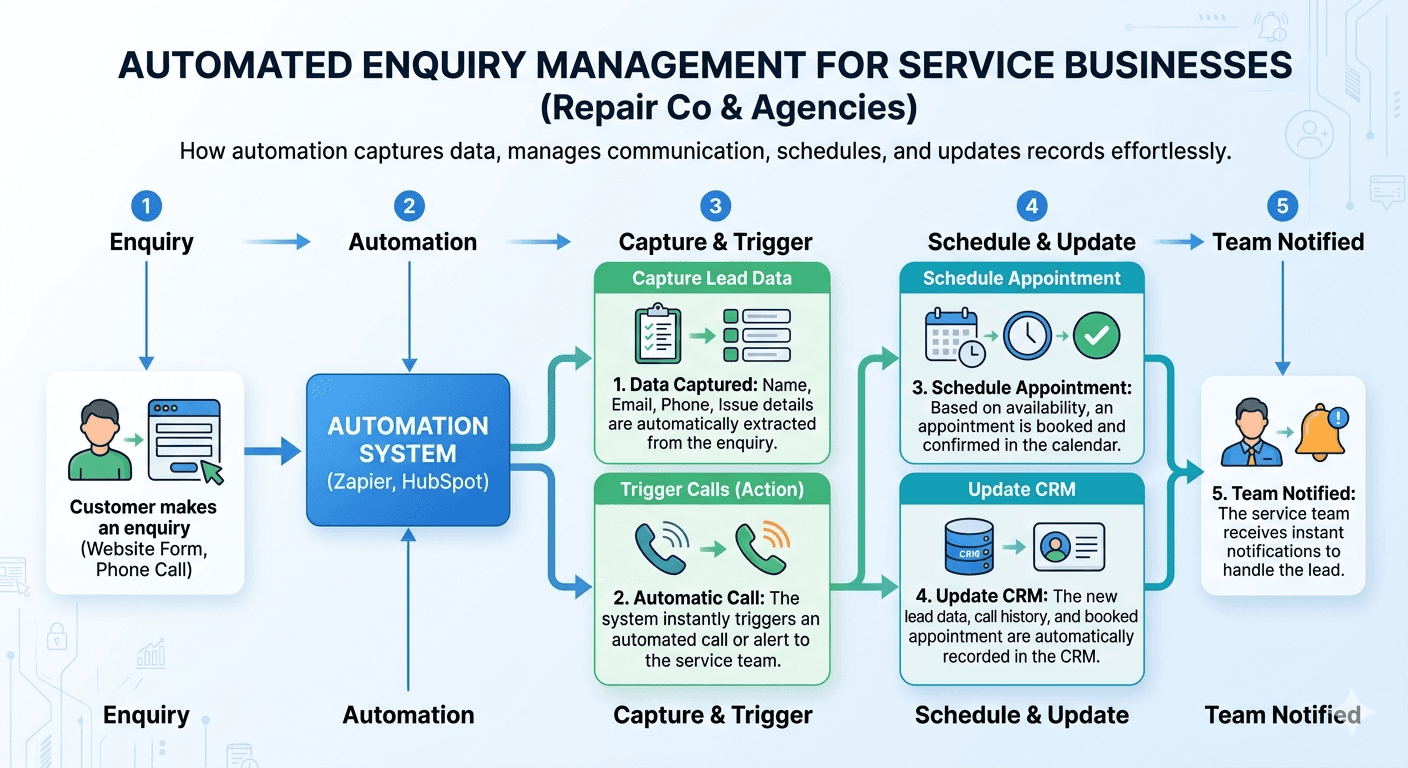
Flow:
Lead → trigger → AI interaction → qualification → CRM → routing
Step 1: Lead capture
- forms
- calls
- ads
- chat
Step 2: AI response
- voice
- chat
- SMS
Related:
AI voice agents for real estate
Step 3: Qualification questions
- service
- budget
- timeline
- decision-maker
- goal
- location
Step 4: Intent signals
- response speed
- completeness
- urgency
- fit
Step 5: CRM update
- source
- status
- score
- notes
Related:
CRM automation workflows
Step 6: Routing
- assign
- book
- nurture
- reject
Practical Implementation
Example: Education consultancy
Step 1: Define criteria
- timeline
- budget
- country
- decision-maker
Step 2: Intake workflow
- form
- call
Step 3: Scoring logic
- budget match
- urgency
- response completeness
Step 4: CRM integration
- contact
- deal
- owner
- stage
Related:
AI SDR workflows for Chandigarh sales teams
Step 5: Escalation
- hot → call
- warm → book
- cold → nurture
Step 6: Optimize
- qualification rate
- booking rate
- close rate
Benefits
- faster prioritization
- cleaner pipeline
- less wasted time
- better conversion
- scalable operations
Related Systems
- AI missed call automation in Chandigarh
- AI lead response automation in Chandigarh
- AI CRM reactivation in Chandigarh
- AI conversion automation in Chandigarh
- AI automation agency in Chandigarh
FAQs
What is AI lead qualification?
Automated screening and scoring of leads.
How is it different from forms?
It interacts and evaluates intent.
Who benefits most?
High-ticket services.
Can AI replace humans?
No, it filters before human interaction.
Is it suitable for Chandigarh?
Yes.
Conclusion
For high-ticket businesses, lead qualification is not a minor improvement, it is a revenue control system.
AI lead qualification helps:
- identify serious buyers early
- reduce wasted sales time
- improve CRM clarity
- prioritize high-value opportunities
For Chandigarh businesses, this means better pipeline control, faster response, and more efficient sales conversations.
AI-native business systems
Bring a niche, or bring a workflow.
If you run the business, we build the system around it. If you sell into a niche, we build the system behind your offer.
PolarBuild case study →You sell the niche. We build the system.
We never compete for your end clients. One partnership conversation. You fulfil the same system across the accounts in your niche.
Free POC before dedicated software
A three-day sales demo of the system for your vertical before any large software investment. Implementation starts only when someone in that niche pays.
Replicate the niche, not a one-off build
UK dental becomes US dental with a new local partner and new integration targets. Same system thesis, new market.